
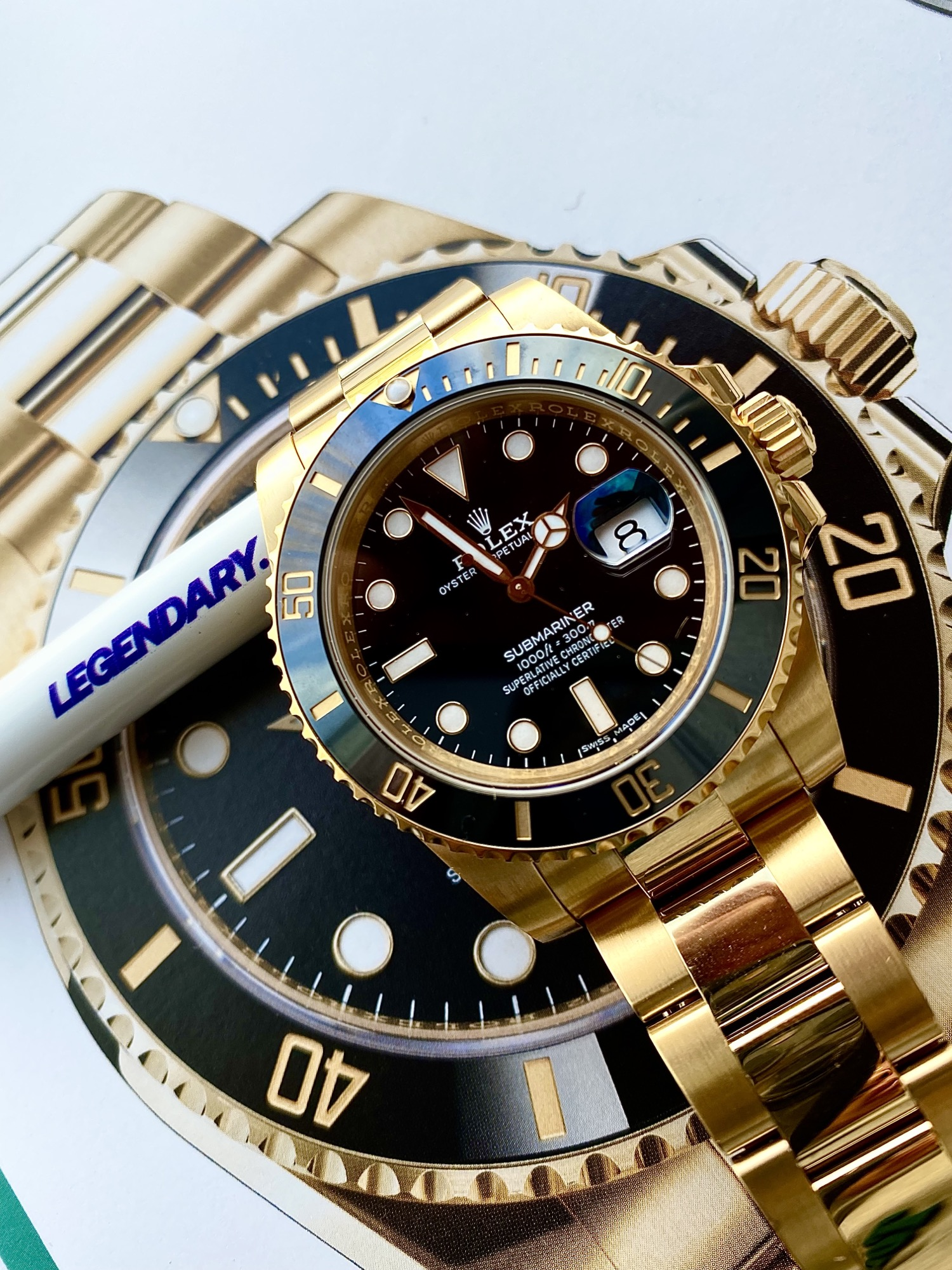
VSF Watches: The Ultimate Guide to VS Factory Replica Watches in 2026
What Is a VSF Watch? Meaning and Background
A VSF watch is a replica built by VS Factory, a Chinese manufacturer that produces structural clones of luxury calibers — not generic movements dressed up behind a display back. When someone says “VSF Submariner,” they mean a specific factory’s version of that model. Not a grade. Not a marketing tier. A manufacturer.
That distinction matters more than it sounds.
Most replica listings describe quality in adjectives: premium, AAA, 1:1, super clone. VSF is a name you can actually verify against measurable specs — case dimensions, movement code, power reserve. It’s the difference between a claim and an address.
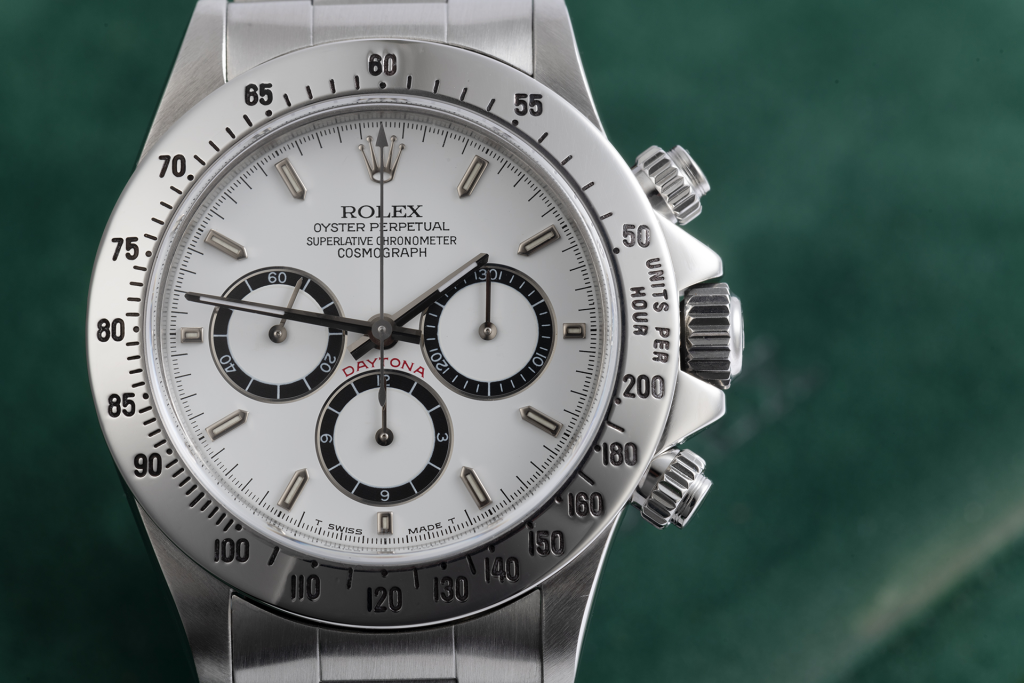
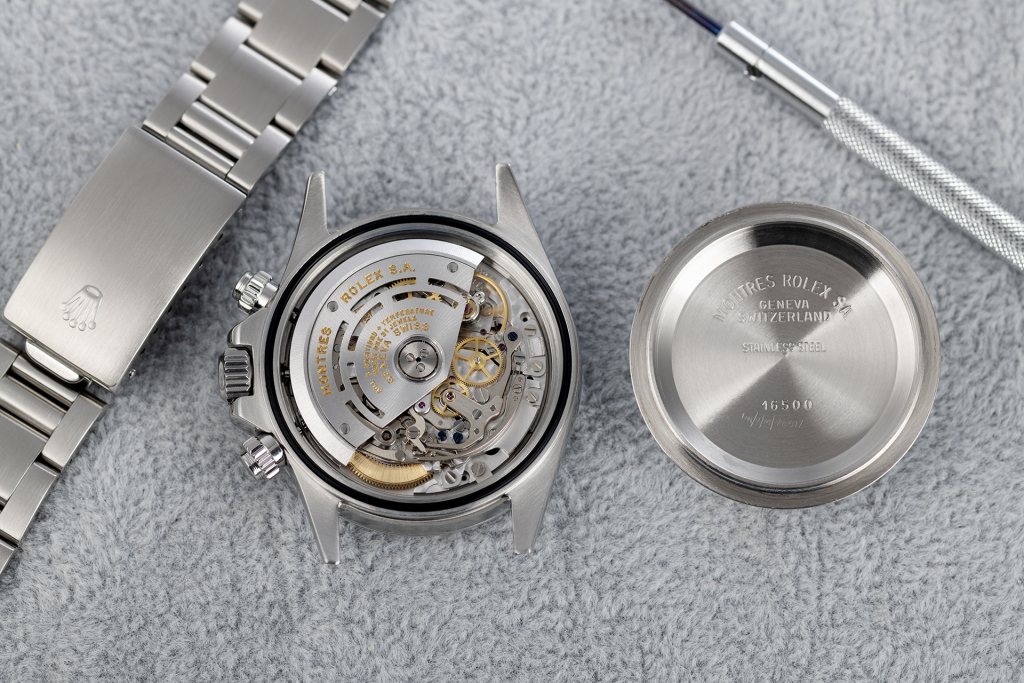
I’ve been reviewing these watches since 2015, and VSF is the factory I’ve written about most — not out of loyalty, but because it produces the pieces that generate the most questions. When a model appears in a VSF version, the forum conversation shifts from “is this any good” to “which version.” That shift is the whole story of this factory.
Look, the practical consequence for anyone shopping is that VSF functions as a filter, not a recommendation. Knowing a watch is a VSF build tells you which movement is inside, what the case should measure, and roughly what it should cost. Three verifiable facts, before you’ve read a single line of the seller’s description.
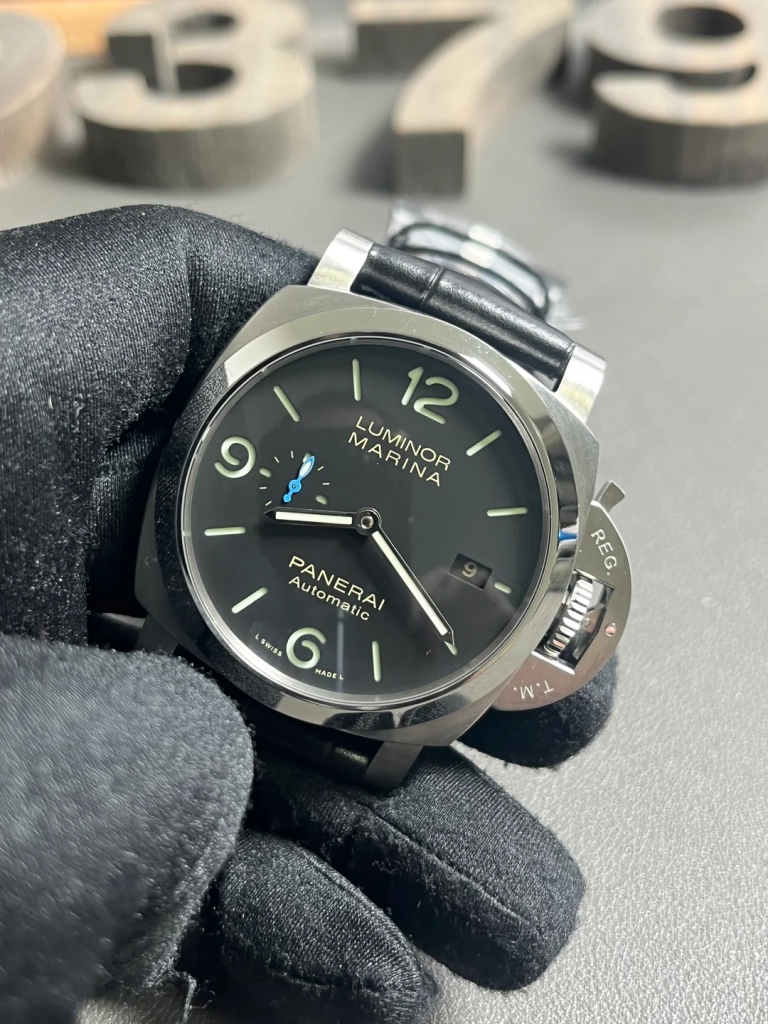
The factory didn’t start as VSF. It operated as KW previously, and older collectors still recognise that name. It began with Panerai — an unusual entry point, since most factories cut their teeth on Rolex — and became broadly known around 2020. The rename to VS Factory came as the reputation consolidated.
Panerai as a starting point is more revealing than it first appears.
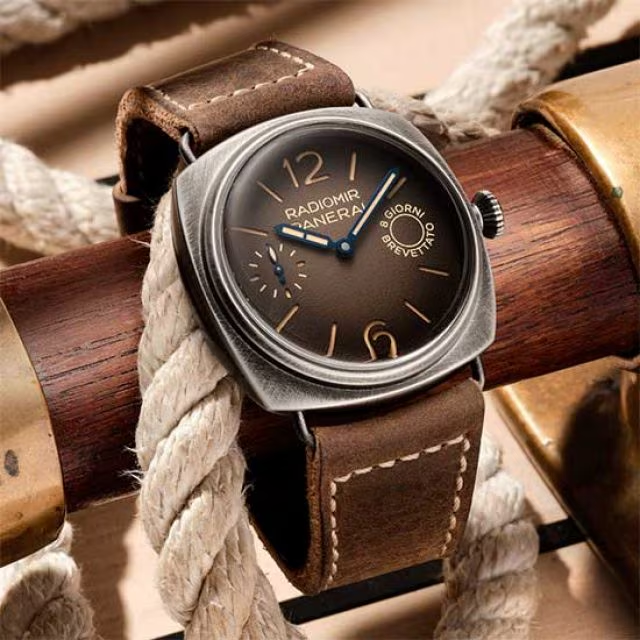
Those cases are large, simple in outline, and unforgiving in finishing — there’s nowhere for sloppy brushing to hide on a flat cushion flank. A factory that learns on Panerai learns case work first and movement work second, which is roughly the reverse of how most of this industry developed.
Here’s the thing about that early period — there was almost no marketing. No elaborate product descriptions. No factory-issued comparison charts. The output improved, dealers noticed that the pieces came back less often, and word moved through the forums on its own. That’s an unusual growth path in a category built on claims.
What Does VSF Stand For in Watches?
VSF stands for VS Factory. That’s the entire expansion — “VS” is the brand prefix the factory adopted, “F” is Factory, the same convention used across the industry for ZF, PPF, BBF, GF and the rest. No hidden meaning. No Swiss connection implied by the letters.
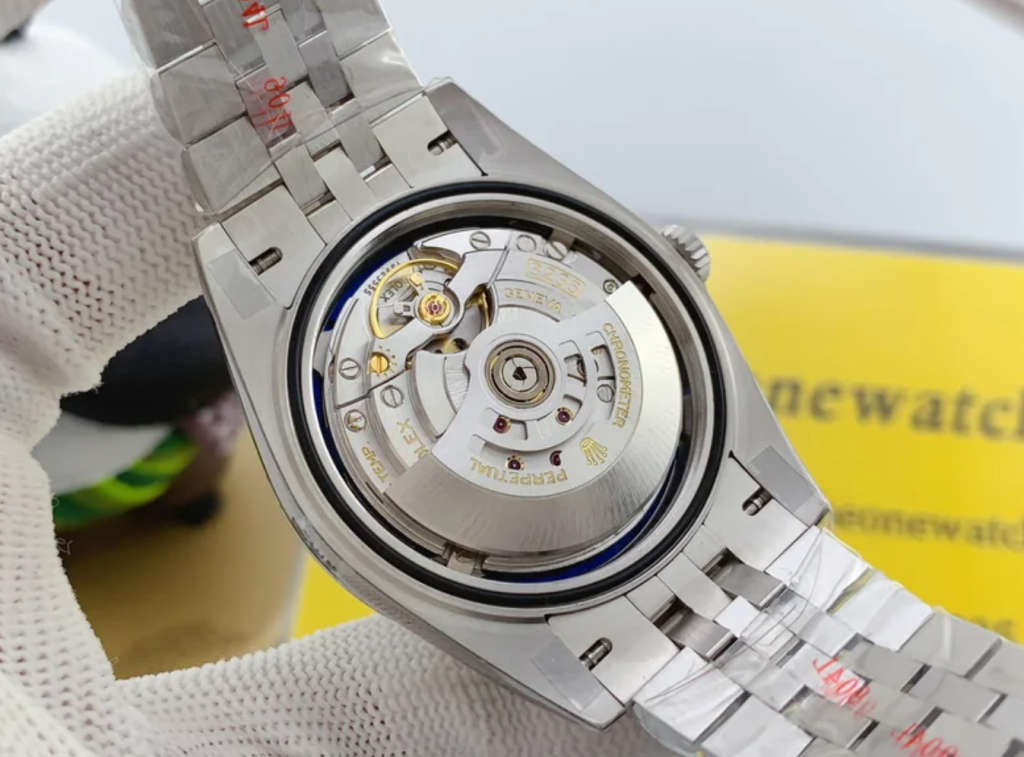
You’ll see the prefix carried into movement names, which causes most of the confusion I get asked about. VS3235, DD3235 and “Dandong 3235” all refer to the same movement. DD is short for Dandong, the city where the movement is produced. VS is the factory prefix. Same caliber, three naming conventions, depending on who’s writing the listing.
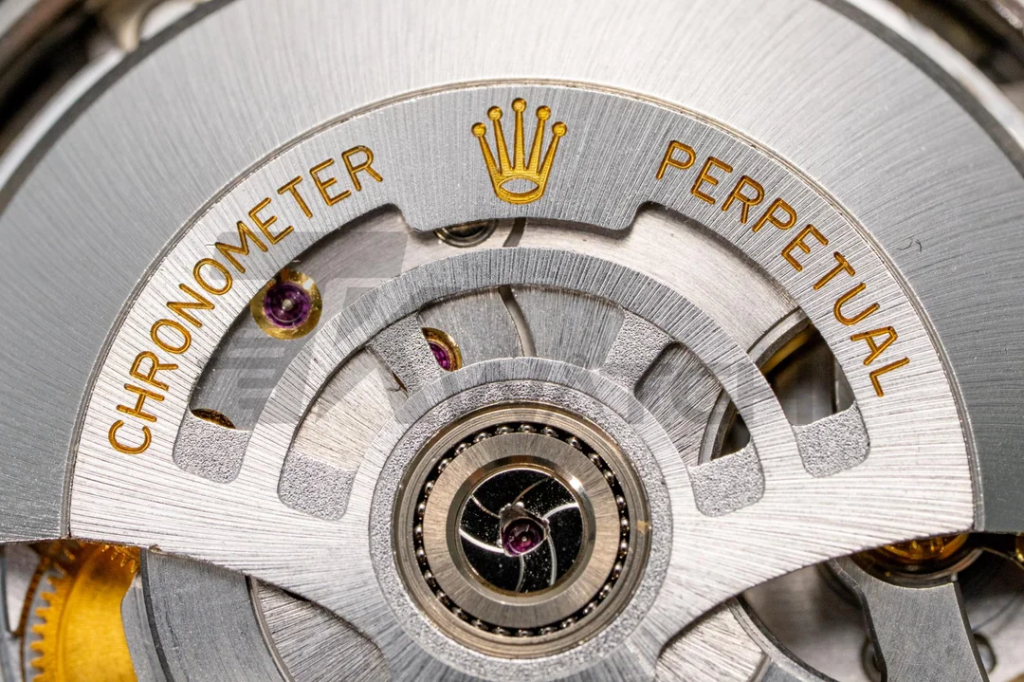
Naming inconsistency isn’t accidental. Sellers pick whichever variant sounds most impressive in a given listing, so the same watch appears as “VS3235” on one site and “Dandong 3235 Swiss-grade” on another. Once you know the three names describe one caliber, half the apparent variety in the market collapses into a much shorter list.
The contrast that actually matters is SH. SH3235 means a Shanghai-produced 3235 — a different movement from a different supplier with different performance. VR3235, for example, isn’t an in-house VR Factory caliber. It’s a Shanghai movement that factory purchased. Reading the prefix correctly tells you more than any product description will.
One follow-on that trips people up regularly: there is no official VS Factory website. The factory has never operated direct retail and structurally can’t, since public retail would hand brand legal teams a target. Every site trading on the VSF name belongs to a dealer. I unpacked the reasons in detail in why no official VSFactory website exists.
VSF Watch Factory: History and Reputation
The turning point for this factory was a movement, not a watch.
When it developed the Dandong 3235, it acquired something no competitor had — a single caliber that fitted across a large share of the most-requested Rolex references. Submariner with date, Datejust 41, Yacht-Master. One development cost, several bestsellers.
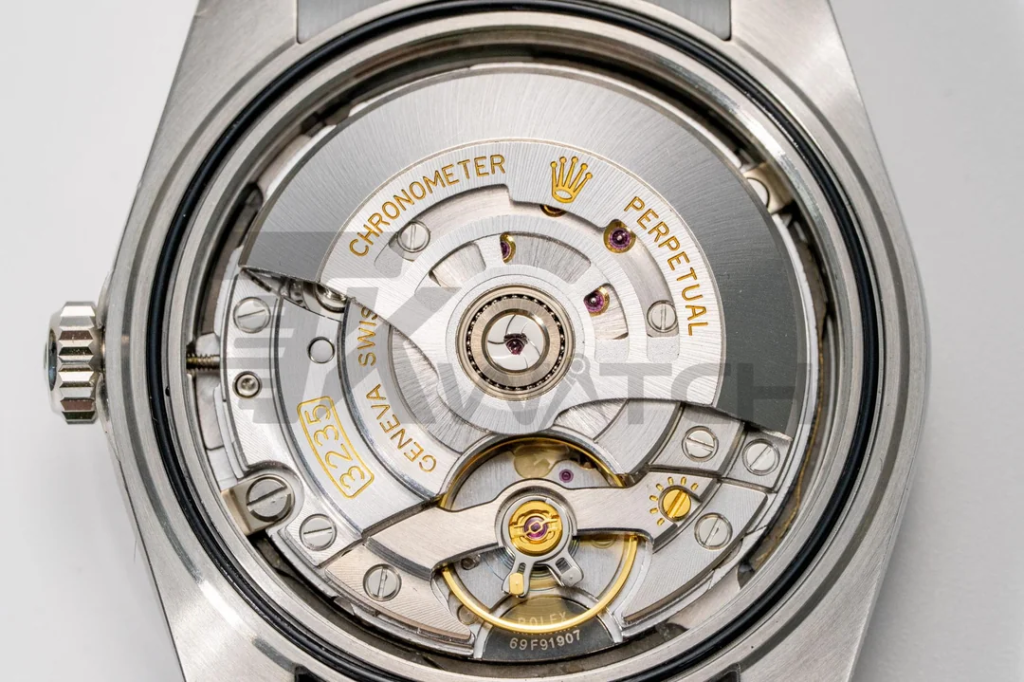
Before that movement existed, the factory was respected but narrow — good at Panerai, competent elsewhere, not the default recommendation for anything. The 3235 changed the category it competed in, not just its position within one. That’s a rarer kind of shift than incremental quality improvement, and it’s why the timeline splits so cleanly around it.
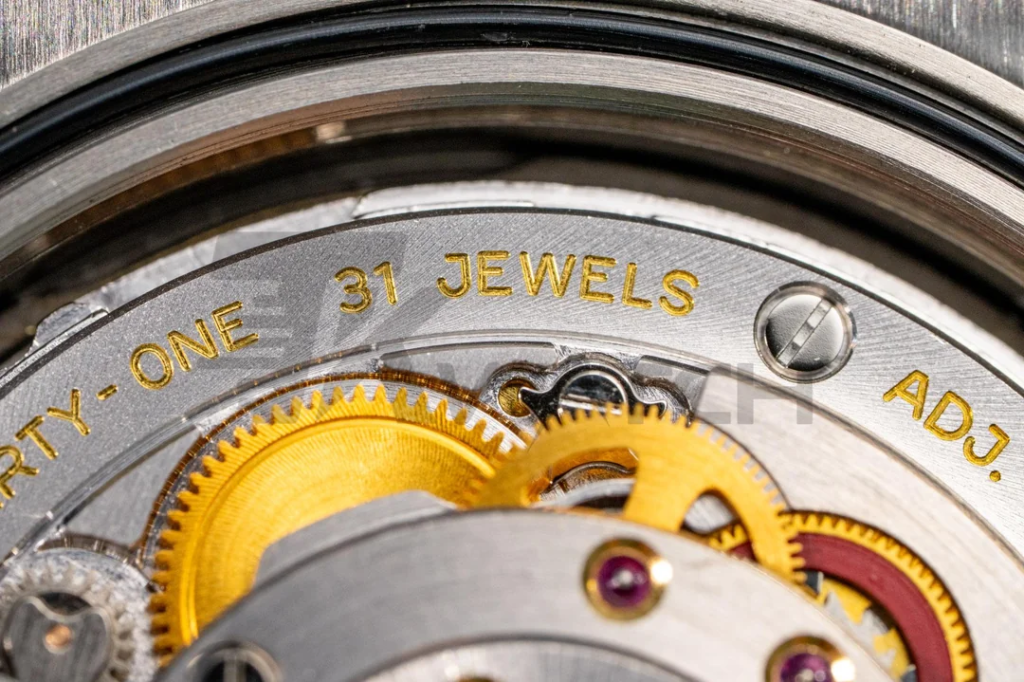
Honestly, that economic structure explains the reputation better than any quality argument. Amortising tooling across several high-volume references let VSF invest in areas competitors couldn’t justify — and the results show up in details most buyers never think to check. The rotor runs on ceramic ball bearings rather than the steel bearings other factories use, which produces a smoother, quieter wind.
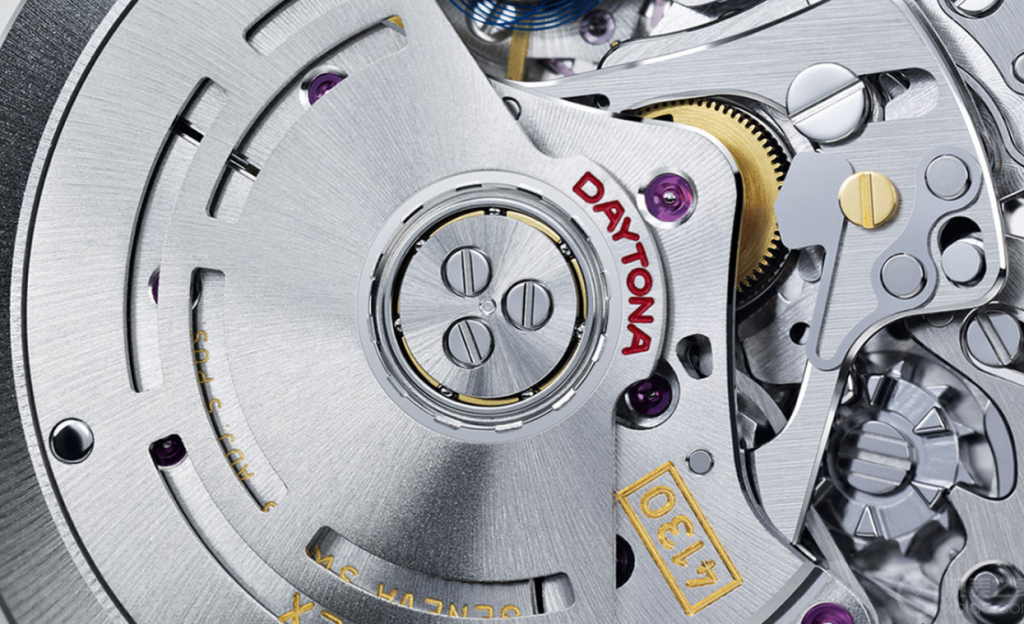
Small engineering choices like the ceramic bearings tend to be the ones that separate factories over a two-year horizon rather than a two-week one. Nobody notices a smoother wind on unboxing day. They notice it when a competitor’s rotor develops audible play in month eighteen and theirs hasn’t — the sort of thing that eventually reaches the forums.
Reputation among dealers rests on a less glamorous number: the return rate on VSF pieces sits around 1%. I’m not the one shipping these, so I take that figure from the people who are — and it’s consistent enough across sources that I’m comfortable citing it. Low returns are why sellers push VSF even when margins elsewhere are better.
The competitive landscape reshaped itself dramatically over the last two years, which is context anybody reading older forum threads needs. Clean Factory — for years the closest competitor, particularly on Daytona and GMT — collapsed around mid-2025 and hasn’t come back. Its resources fragmented afterwards, with the Dandong 3235 movement access understood to have gone to VSF.
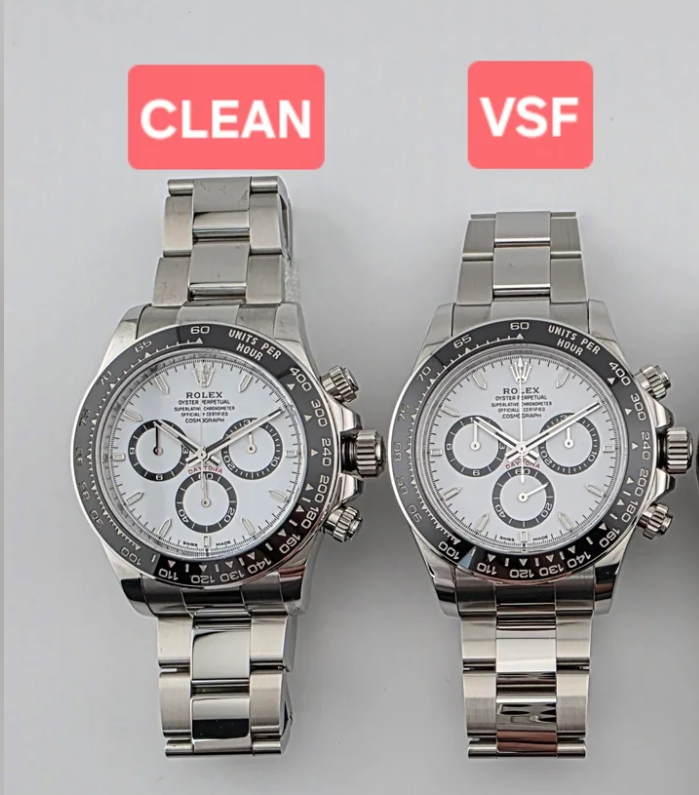
APS Factory, which owned the Royal Oak category, was shut down by local police around April 2026 and is currently out of production. What remains in circulation is clearance stock. Whether it returns is genuinely unknown — the pattern closely resembles what happened to Clean. I’ve tracked the fallout in the post-Clean GMT and Daytona landscape.
Quick aside worth flagging, because it changes how you read older reviews: a 2024 comparison recommending Clean over VSF on a given Daytona reference may have been correct at the time and is now useless as buying advice. The losing option in that comparison is the only one still in production. Date-check anything you’re using to decide.
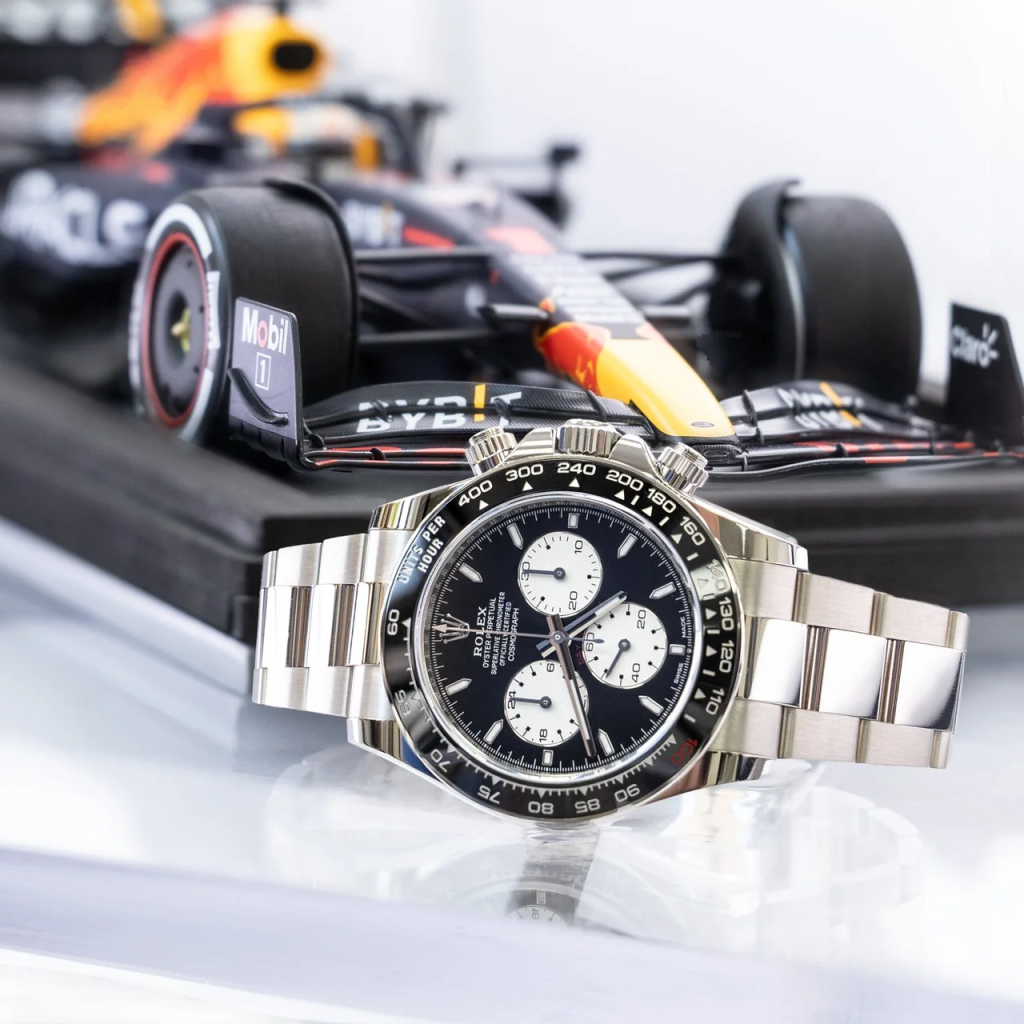
The result is that VSF is now the last standing option in several categories, not merely the best one. That’s a meaningful difference. Being the default because rivals disappeared isn’t the same as being the default because you won. The output is genuinely strong, but the current market position owes as much to attrition as to execution.
Side note — before the Clean collapse the two factories had an arrangement worth knowing about: VSF traded exclusivity on the older Dandong 3235 for shared access to the Dandong 3285, splitting the licensing cost. That kind of cooperation between supposed rivals tells you the movement supply chain is far narrower than the number of factory names suggests.
VSF Watch Movement: What Makes It Special
The movement is where 60 to 70 percent of the build cost sits, so this section carries more weight than everything else on this page combined.
Bottom line: the movement is the watch.
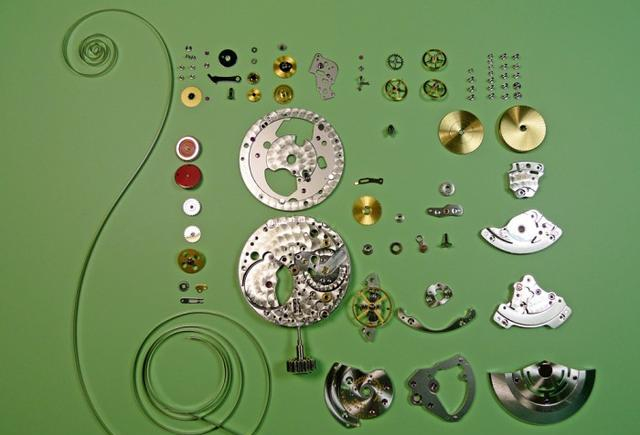
Older calibers still circulate and it helps to recognise them. The DD3135 sits in earlier 40mm Submariners and Datejust references and runs about four years by owner reports. The DD3130 handled the earlier no-date models. Both have been superseded. Being offered either as current production in 2026 means you’re looking at leftover stock.
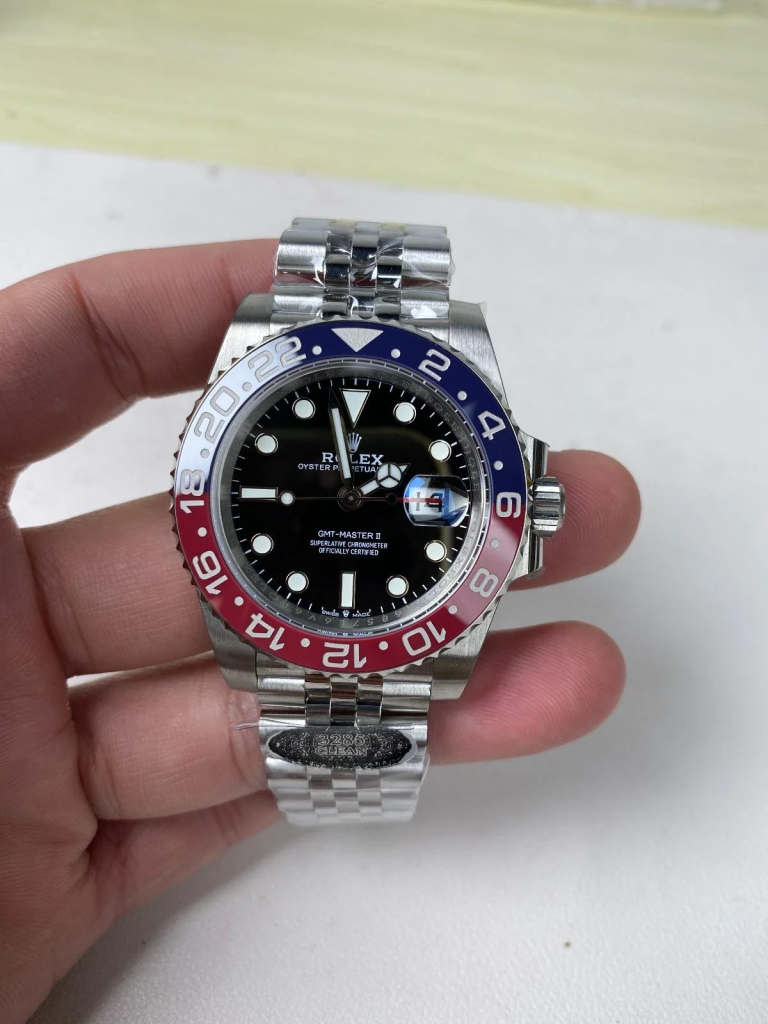
The Dandong family breaks down cleanly. DD3235 covers Submariner with date, Datejust 41 and Yacht-Master, at roughly 70 hours of power reserve — matching the genuine spec. DD3230 handles the no-date references. DD3285 runs GMT-Master II, which is worth stating plainly because “3235 in the GMT” is the most common spec error I correct.
The DD3230 deserves its own paragraph because it solves a problem that annoyed collectors for years. Generic movements retain the date-setting crown position even in watches with no date window, so pulling the crown to the first click does nothing at all.
Dead stop.
The DD3230 removes that stage — first click goes straight to time setting, exactly like the genuine caliber.
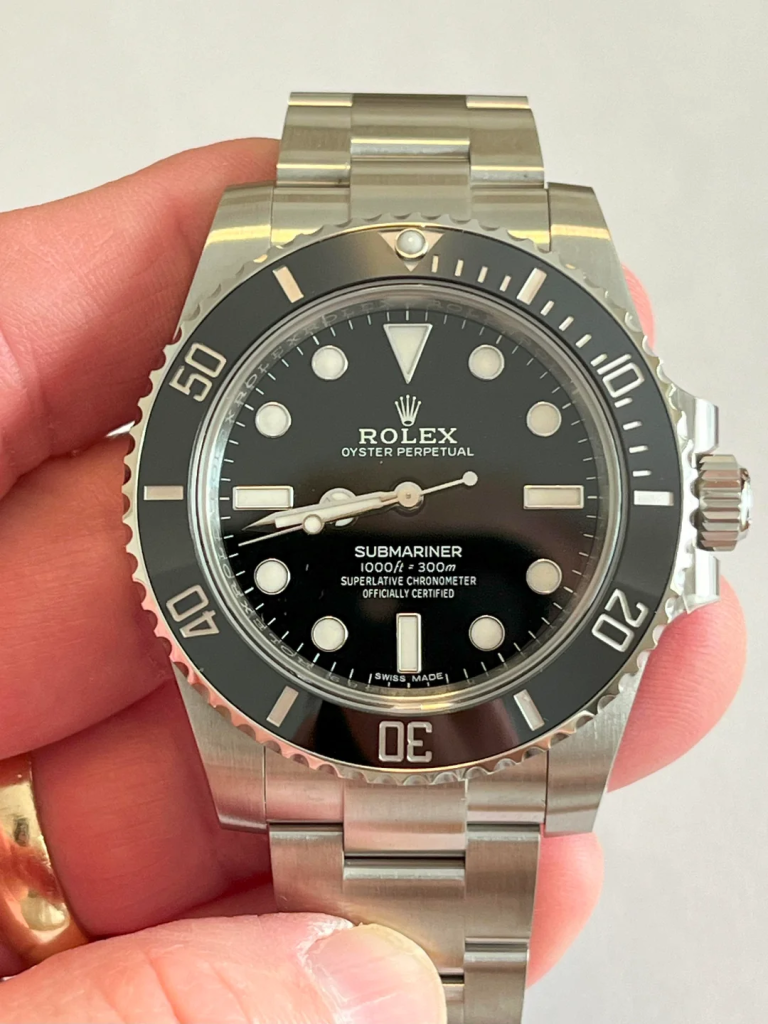
Mechanically the DD3230 is a 3235 with the date stage removed, so performance is identical — same 70-hour reserve, same finishing, same stability. It isn’t a new movement. It’s a purpose-built variant, and right now it’s exclusive to VSF, appearing in the third-generation no-date Submariner and the newer Air-King. My full teardown of the family sits in the Dandong movements explainer.
Access to this movement family is the real competitive moat, and it’s narrower than most buyers assume. Only a small number of manufacturers have ever had the Dandong line at all, and the calibers are expensive to buy in. That’s why so much of what gets advertised as a Dandong movement at a lower price point is a relabelled Shanghai unit.
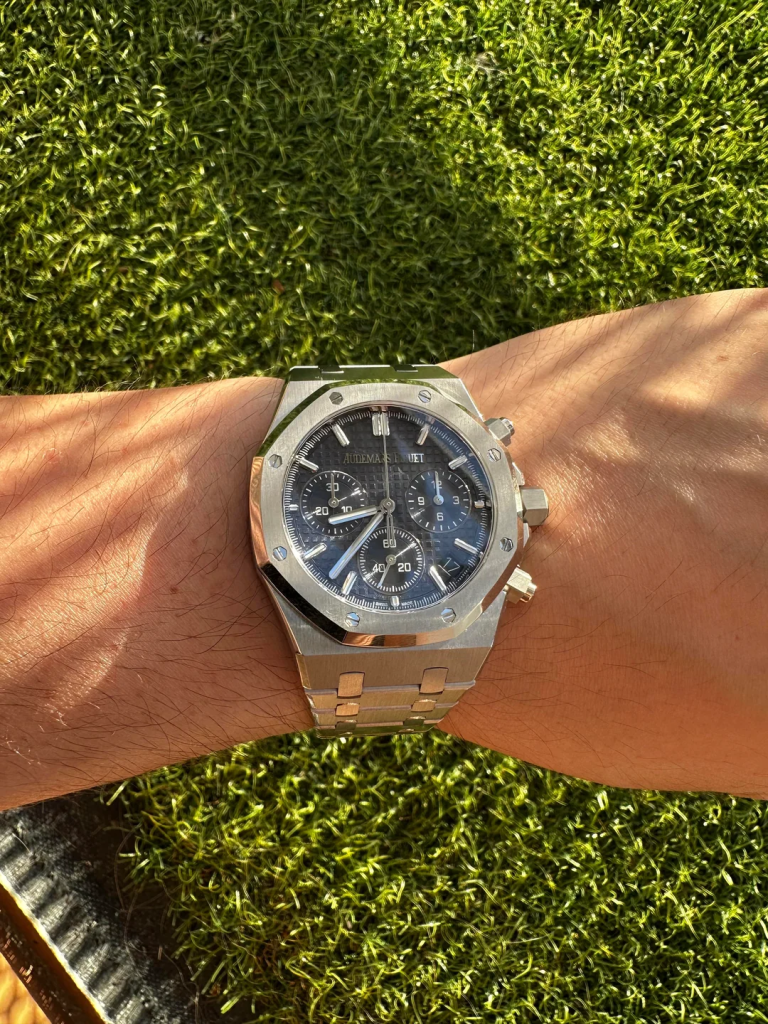
For chronographs, DD4130 and DD4131 drive the Daytona references and are the most expensive calibers in the catalogue. On the Omega side, DD8800 serves the Seamaster Diver 300M, DD8500 the Aqua Terra and De Ville, DD8900 the Planet Ocean 600M. DD4302 is the newest, built for the Royal Oak 15500.
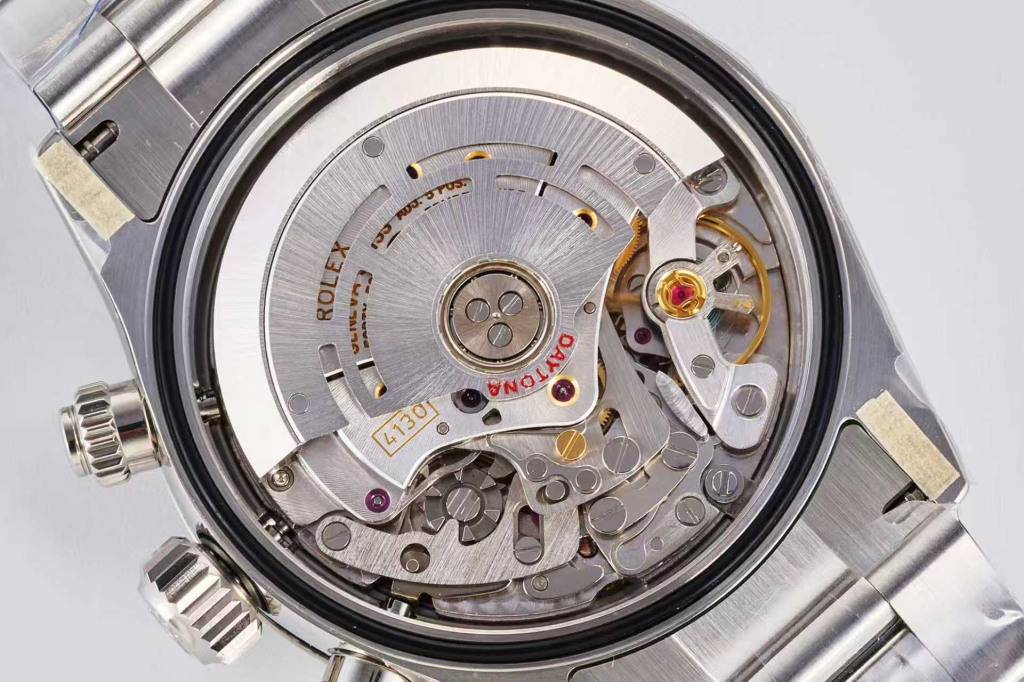
Where you see the manufacturing gap most clearly is in finishing details nobody advertises. On Datejust movements, the VSF baseplate carries a grid-pattern finish noticeably finer than what Cplus and ARF produce on the same caliber. The rotor colour sits close to silver-gold, tracking the genuine silicon-metal rotor, where APS runs more yellow and JF more rose.
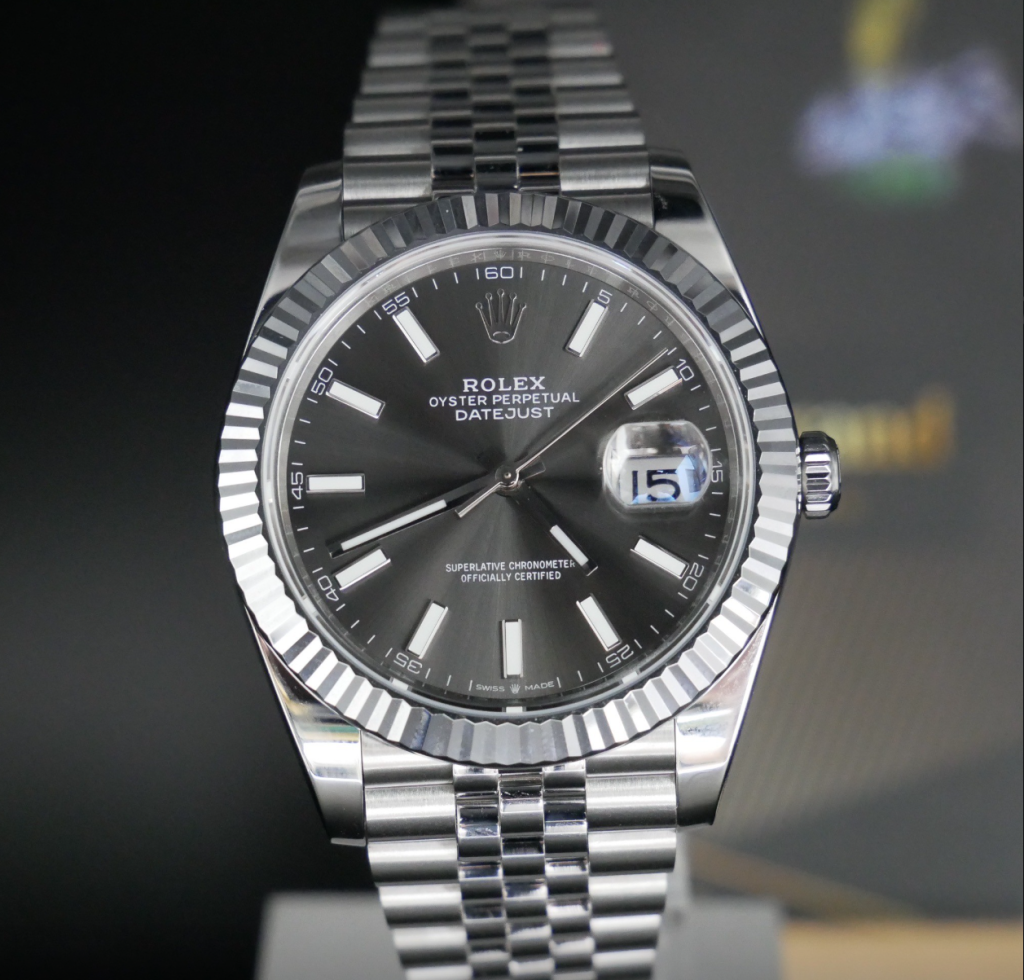
The Datejust builds also demonstrate how tight the specification tracking has become. Recent shipments have leaned toward seven-jewel versions, whole-watch weight lands around 133 grams, and the power reserve on the grey-dial 41 sits close to the 70-hour figure. Those are the kinds of numbers that let you verify a claim instead of accepting one.
Two limits I’d want stated if I were buying.
First, full specifications don’t exist — beat rate, jewel count, declared tolerance are never published, because these factories publish nothing. What circulates is measured data. Second, the genuine caliber regulates timing via adjustable weights on the balance. The VSF version doesn’t carry those, which is a real architectural difference rather than a finishing one.
VSF Factory Raid: What Happened and Current Status
This search term comes up constantly, and most of what gets written about it conflates several separate events. Let me separate them.
Real talk — two things get merged that shouldn’t be: enforcement action against a factory, and a factory quietly going under. The first is visible and abrupt. The second happens through supply drying up over months, and by the time the forums notice, parts availability has already collapsed. Both end the same way for a buyer holding one of those watches.
Raids are a structural feature of this industry, not an anomaly. Over the years enforcement action has hit N Factory, AR Factory and VS Factory among others, and the collapse of AR took its Audemars Piguet sub-operation, JF, down with it. GF was raided in 2023 and later resurfaced under a different name. The pattern repeats often enough to be predictable.
And the pattern has a logic: the biggest factory is the one that gets targeted. Scale attracts attention, attention attracts brand legal teams and local enforcement. Every manufacturer that reached the top of this market eventually dealt with it. That’s the frame to hold when reading about any factory’s troubles, including VSF’s.
What’s happening right now, though, is that two other events are being attributed to VSF. APS was shut down around April 2026 and remains out of production. Clean collapsed around mid-2025. Both were major suppliers, both disappeared inside twelve months, and searches about factory raids surged accordingly.
VSF is currently operating.
The absence of an official channel compounds this. Because every seller is an independent dealer working from the same constrained output, delays get attributed to whoever answers the message rather than to the factory schedule that actually caused them. A dealer promising 24-hour dispatch on a non-stock piece is describing something the production cycle doesn’t support.
Operating, but not comfortably. The factory releases stock roughly once every one to two weeks rather than continuously — a deliberately low profile that’s been its practice for years. Combined with the demand it absorbed after Clean’s collapse, that produces a persistent backlog. Lead times of five to eight days from order to dispatch are normal when a piece isn’t already in a dealer’s hands.
There’s also no factory-level after-sales support to speak of. Whatever service you get comes from the dealer you bought through, not from VSF. That’s worth building into the decision rather than discovering later — and it’s the same for every factory in this category, so it isn’t a VSF-specific criticism.
If you’re weighing an APS piece against a VSF alternative right now, the supply question outweighs the quality question. I worked through that specific decision in whether APSF is still worth buying in 2026, and the short answer is that clearance stock without parts supply is a different product from what it was a year ago.
VSF Clone vs Super Clone: Understanding the Difference
These two phrases get used interchangeably in listings, and they shouldn’t be. “Clone” properly describes the movement — a caliber built to the architecture of the original. “Super clone” describes the complete watch: cloned movement plus matched case materials, correct dimensions, and dial and bezel execution at the same level.
The distinction has a practical use beyond vocabulary. A watch can carry a genuinely cloned movement inside a case that misses its dimensions by half a millimetre, and it’ll still be marketed as a super clone. Splitting the two terms lets you ask two separate questions about the same product instead of one vague one.
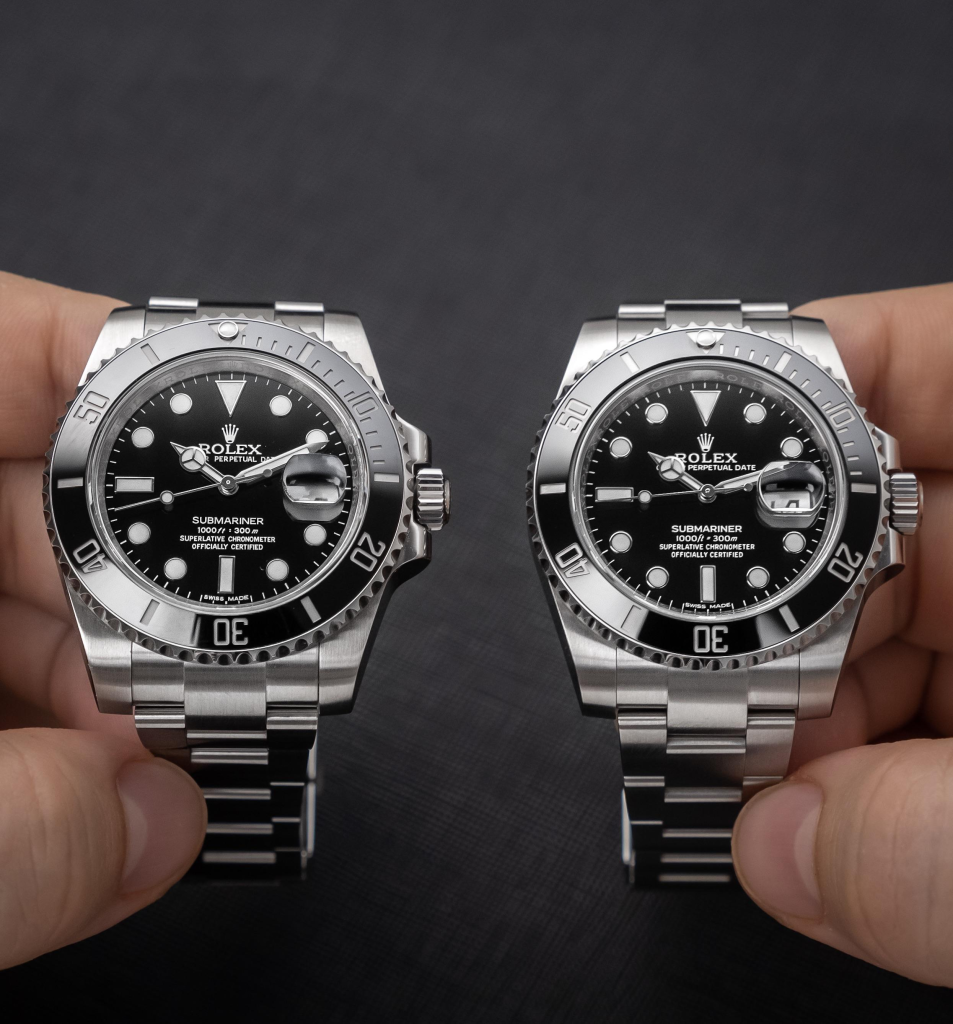
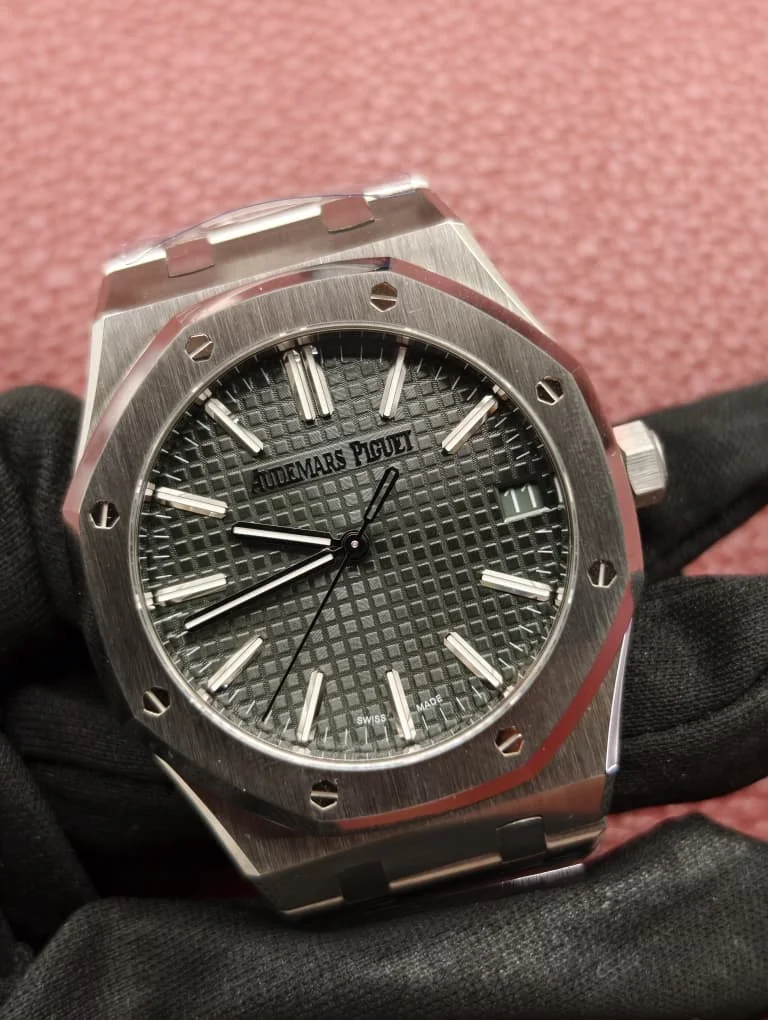
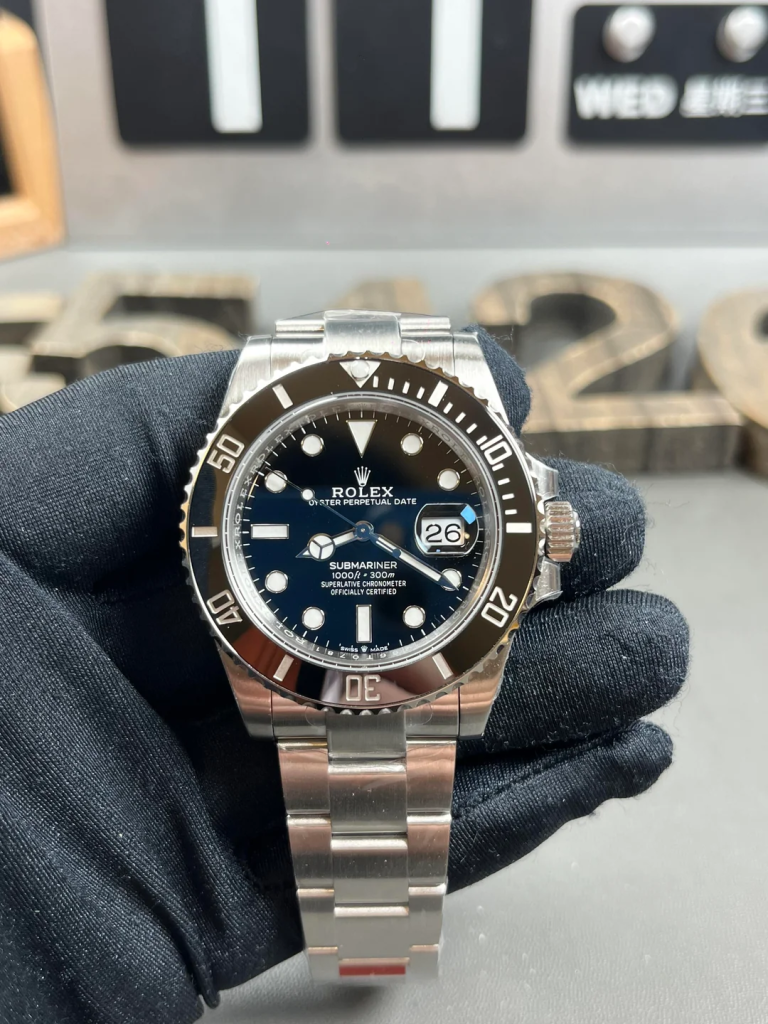
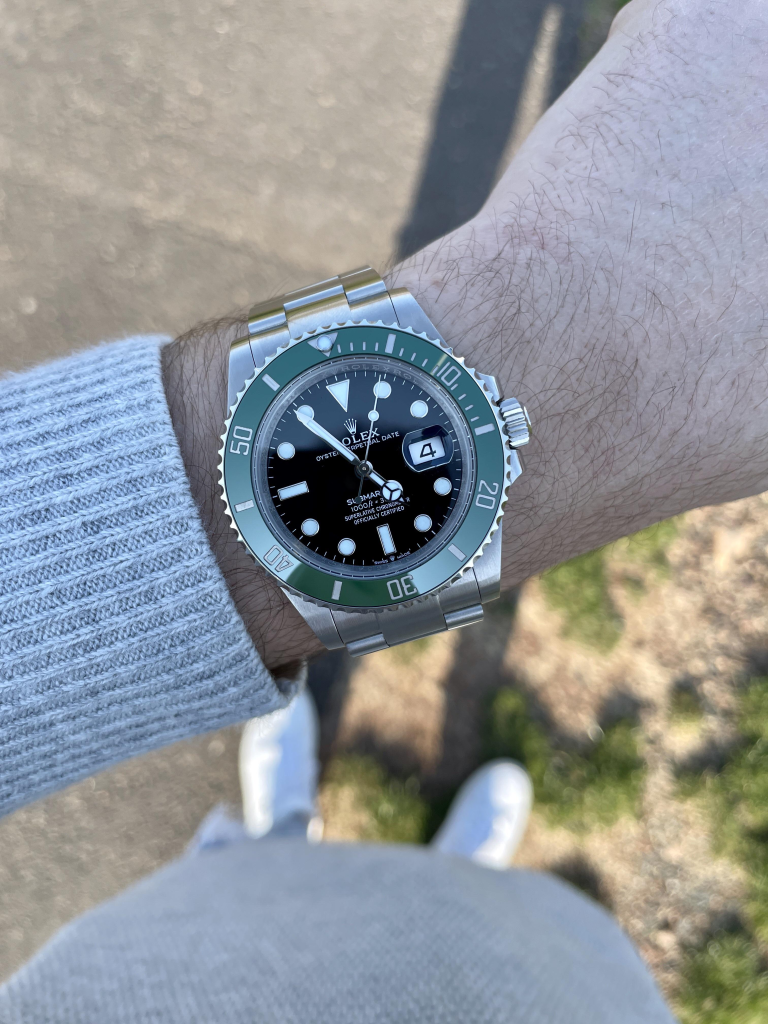
By that standard, VSF pieces qualify as super clones, and the measured figures back it. The no-date Submariner comes in at 40.8mm across the case, 12.5mm thick, 153 grams with the bracelet — thickness matching genuine. The 41mm green Submariner measures 12.4mm with the protective film removed, again matching. The Royal Oak 15500 runs 41mm at 10.4mm thick. Also correct.
Hand geometry is another marker worth knowing, and almost nobody checks it. On VSF pieces the metal section at the tail of the hour and minute hands runs shorter than what competing factories produce, tracking the genuine proportion. It’s a detail you’d never notice unaided and can’t unsee once it’s pointed out.
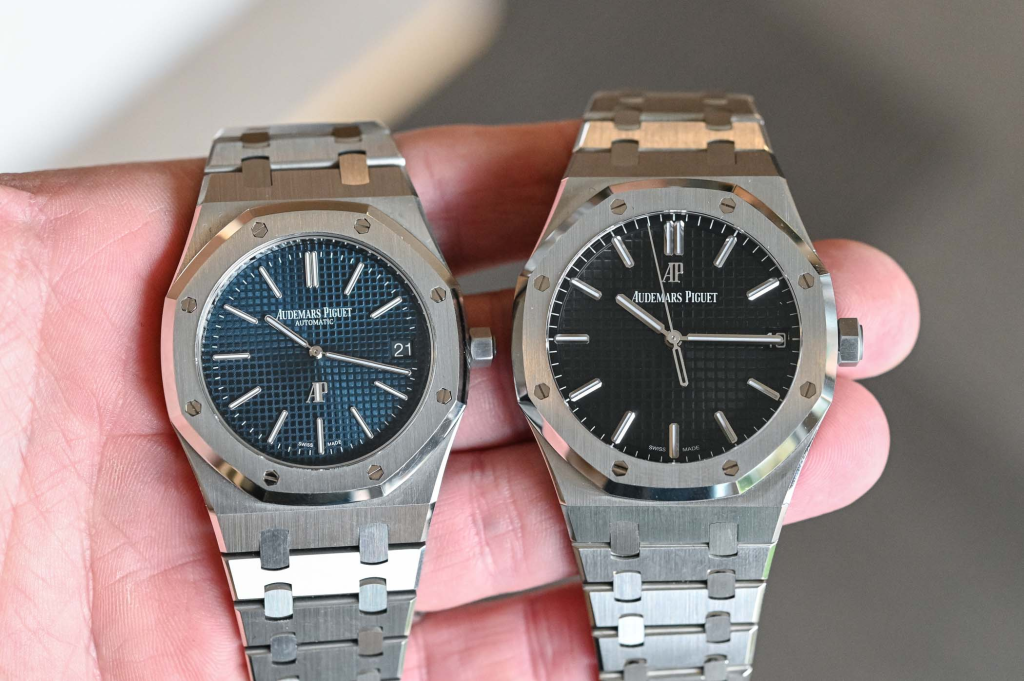
Dial-level execution follows the same pattern. On the Royal Oak, the Tapisserie grid runs 12 to 14 crossing lines against the 10 to 12 other factories manage, which puts the pattern density closer to genuine. On the Datejust, the date wheel background is warm yellow as on the original, where competitors use grey with white text.
Now the version-number question, since it belongs here. V3 isn’t a factory designation. Official communication went as far as V2; V3 was coined by overseas forum users and stuck. More usefully — when a factory releases a new version it discontinues the previous one. Only one version is ever in production, so “choose between V1, V2 or V3” is either old stock or invention.
That said, being the strongest factory doesn’t make every release flawless, and I’d rather cover the exceptions than pretend they don’t exist. The V3 GMT-Master II Pepsi generated persistent lubrication complaints, which I looked into separately in the Pepsi lubrication write-up. Some of it was break-in behaviour. Some of it wasn’t.
Worth being clear about what a factory reputation can and can’t do for you. It tells you what the piece should be. It doesn’t verify what arrived in the box, and the gap between those two things is exactly where the current wave of relabelling operates. The name on the listing is a starting hypothesis, not a conclusion.
The more immediate risk in 2026 is relabelling. Other factories now copy VSF pieces directly, with the 41mm Datejust the most targeted reference. Combined with sellers who simply attach the VSF name to lower-tier stock, verification matters more than it did two years ago. The checks I use are in the Datejust V2 verification checklist.
VSF Watches Price Range: What to Expect
Pricing in this category has a hard floor and a hard ceiling, and knowing both protects you from the two most common mistakes.
The floor is roughly $400. No VSF piece sits below it, because that figure approaches dealer cost with almost nothing on top. A steel sports Rolex runs $450 to $600, with the Submariner Date 126610LN near the upper end. Anything advertised as VSF at $300 is another factory’s work wearing the name.
Hard pass on those.
The narrowness of these bands is itself the useful information. In most product categories price spreads widely with quality, so a high number can plausibly mean a better item. Here the top of the range is capped by what the factory charges, and everything above it is distribution. That makes an unusually high quote just as informative as an unusually low one.
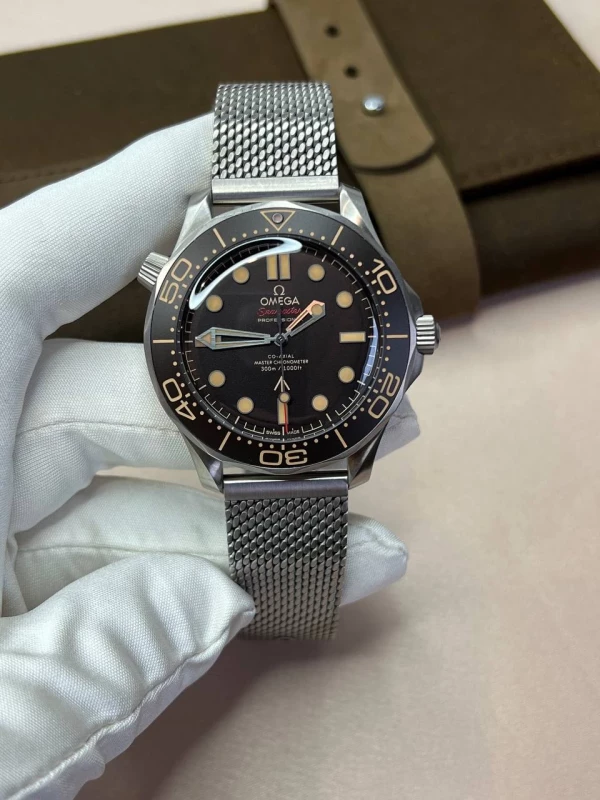
The ceiling is around $1,100, set by the Daytona at $800 to $1,100 on account of the chronograph movement. Omega sits lower across the board: Seamaster Diver 300M at $400 to $480, Aqua Terra 150M at $380 to $420, Planet Ocean 600M at $450 to $550. Panerai lands at $400 to $500.
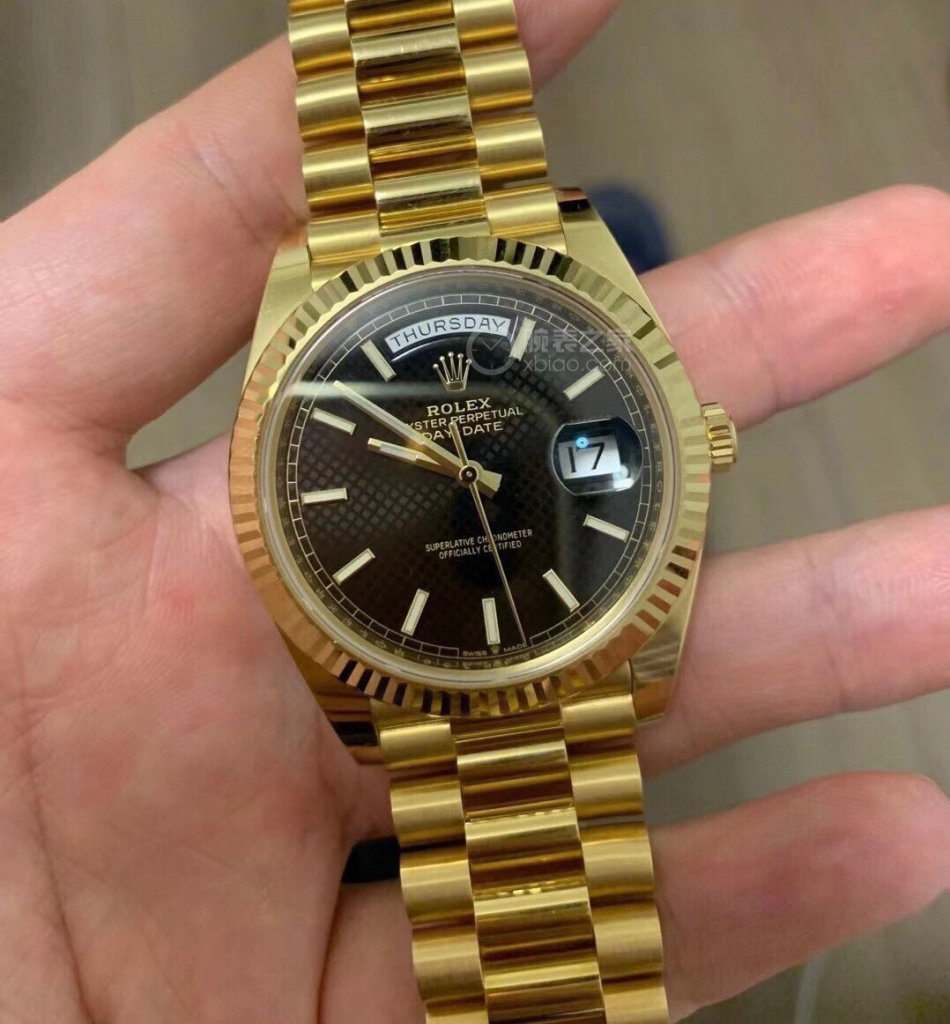
Gold-tone references carry roughly $200 over the standard version when they include internal tungsten counterweighting. That premium buys a genuine engineering fix — 18k gold is far denser than steel, so gold replicas historically felt hollow, and the counterweight ring corrects the mass without altering the look or adding case height.
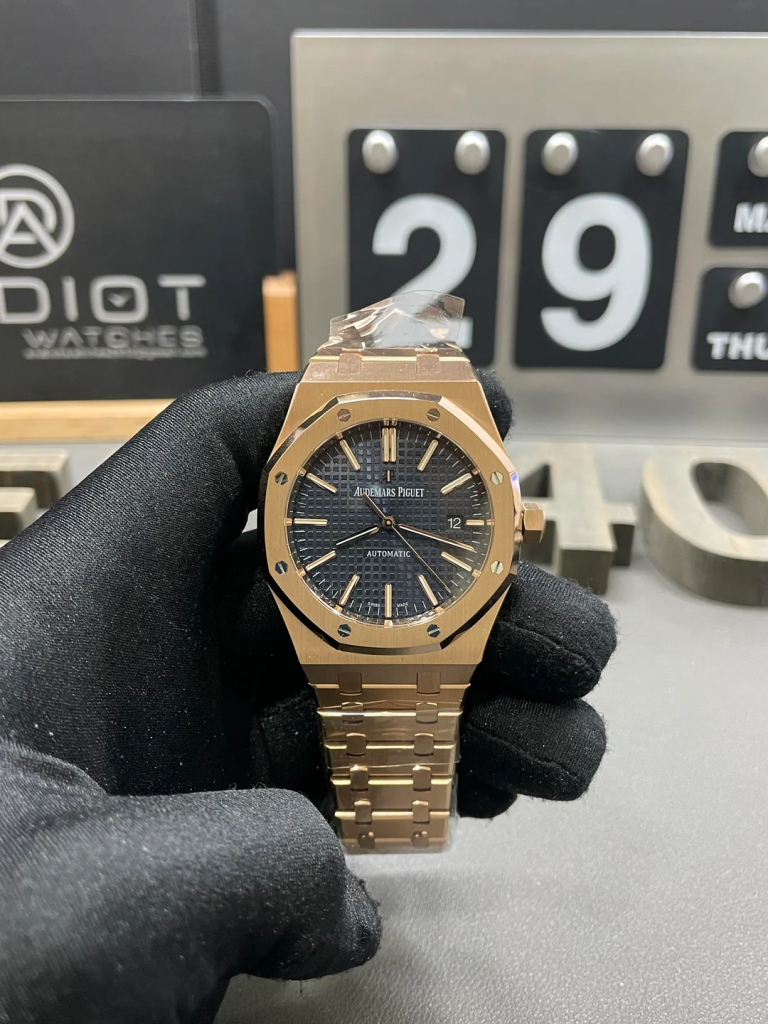
The Royal Oak 15500 sits slightly outside the usual Rolex framing, since it was this factory’s first Audemars Piguet and runs the newest caliber in the family. With APS out of production, it has also become the practical default in that category rather than one option among several. I covered the piece itself in the 15500 review.
Above $1,100 for a steel model, there’s nothing to buy. No premium build exists at that level — the extra is margin. Prices do vary between sellers within the bands, and that variation reflects service and communication rather than a different product, since everyone is pulling from the same factory output.
If you’re choosing between the two Submariner references specifically — that’s the most common decision in this whole catalogue, and I compared them directly in the 126610LN versus 124060 write-up. On the Omega side, the Seamaster 300M V4 is the reference point I’d start from.
Frequently Asked Questions
What does VSF stand for in watches?
VS Factory. “VS” is the manufacturer’s prefix, “F” is Factory, following the same convention as ZF, PPF and BBF. The prefix also appears on movements — VS3235, DD3235 and Dandong 3235 all describe the same caliber.
What is a VSF watch?
A replica built by VS Factory, using cloned calibers from the Dandong series rather than generic movements. Case materials match the originals on Rolex references, including 904L steel, sapphire crystals and sintered ceramic bezels.
Are VSF watches waterproof?
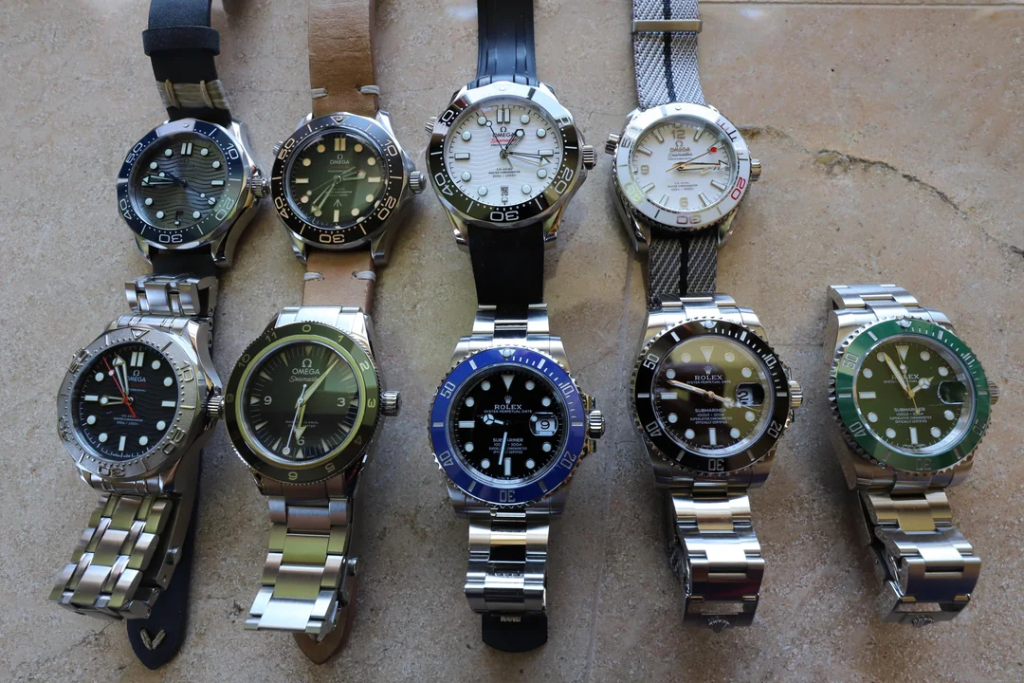
The sports models handle water properly. Submersion testing on a Datejust, Yacht-Master and Daytona for around six hours each produced no ingress, and dive references like the Submariner handle swimming without issue. Dress models take splashes and handwashing fine, but there’s no reason to push them further.
How long do VSF watches last?
Based on owner reports gathered over years rather than any published figure: DD3235 and DD3230 five years and up, DD4130 and DD4131 the same, the Omega calibers around four. No factory publishes lifespan data, so treat those as field observations. What actually wears out first is usually crowns, stems and clasp springs.
Are VSF watches legal?
Selling replicas of trademarked watches is illegal in the US and most of Europe — that part isn’t ambiguous. Personal importation is a customs matter and parcels can be seized. I review these watches rather than sell them, and I’m not in a position to give legal advice, so treat that as a description of the situation rather than guidance.
Where I’d leave it: VSF earned its position through the Dandong movement programme and has held it partly because the competition disappeared. The output is genuinely the strongest available in most categories, the supply is slow, the version numbering is folklore, and the price bands are narrow enough that anything outside them tells you something. Check the caliber code, check the measurements, and ignore the adjectives.