
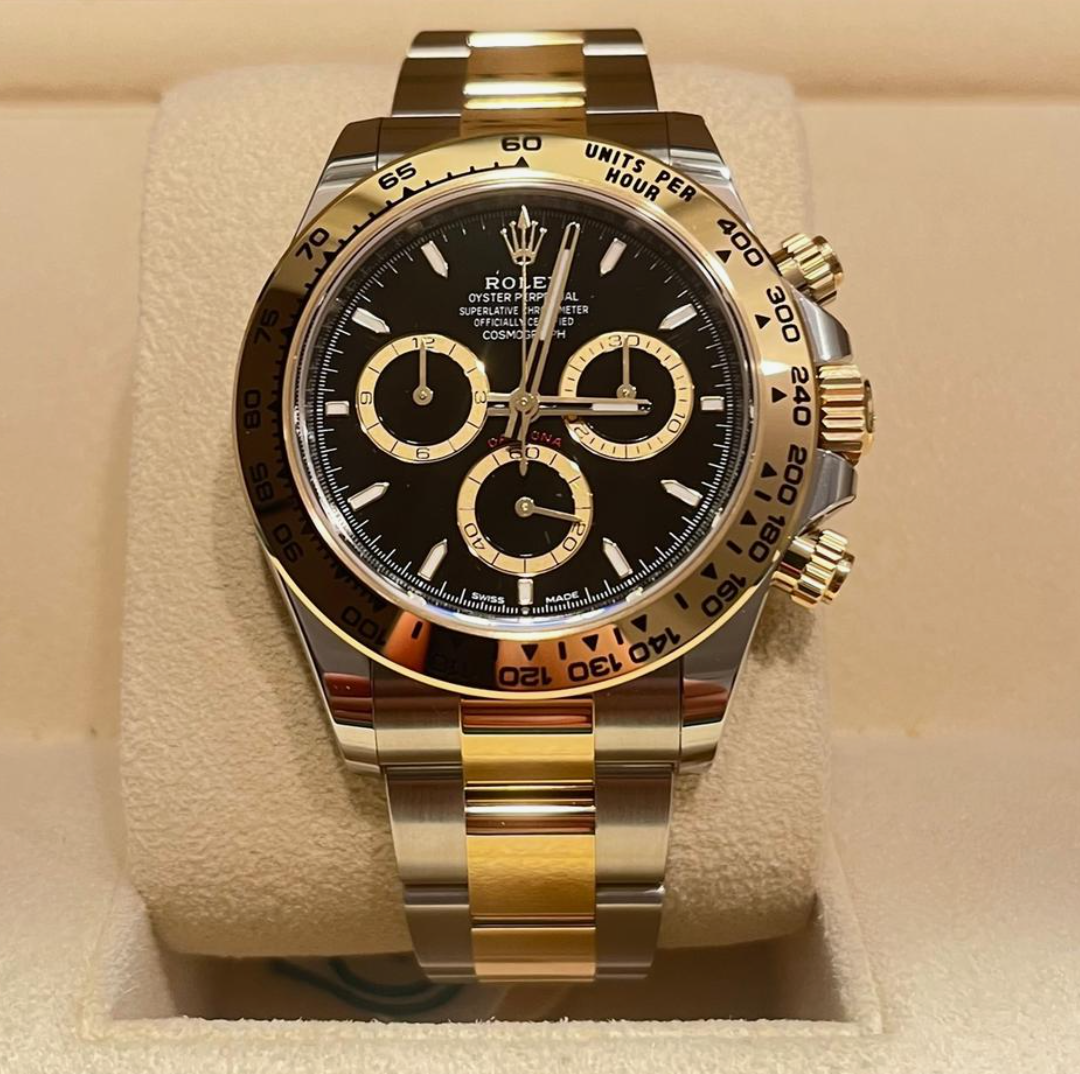
Why Gold Replica Watches Finally Feel Right — Tungsten Weighting Explained
Gold Replicas Have Two Problems — Only One Got Solved
Pick up a gold-tone replica made before 2025 and you know instantly. It’s light.
Not slightly. Obviously, embarrassingly light — the kind of light that gives the whole watch away the second it leaves the box.
That’s physics, not sloppiness. Genuine 18K gold and 950 platinum are dramatically denser than the steel a replica case is cut from. Same shape, same dimensions, far less mass. For years there was nothing to do about it.
Then factories started building weight back in. And honestly? It worked — the good implementations genuinely close most of the gap.
But here’s the thing. Gold replicas have two problems, and weight was the easier one. The other is that the gold colour itself is electroplating, and electroplating wears. That one is still unsolved, and I’ll get to it.
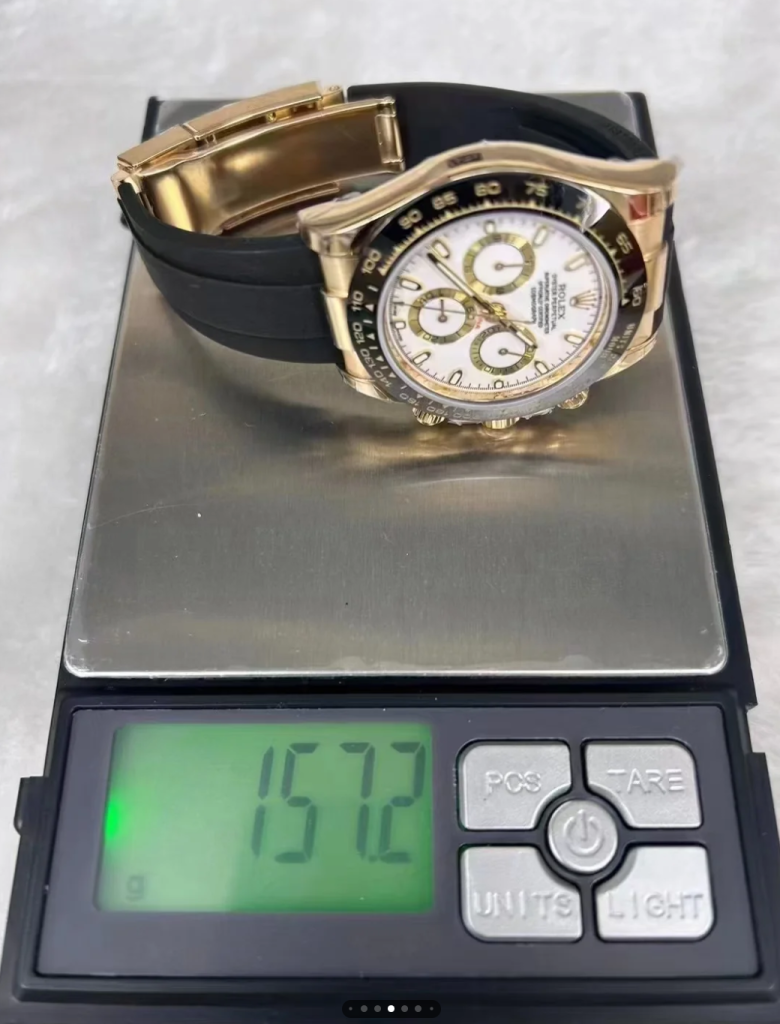
How Many Grams Are Actually Missing
Numbers first. This argument gets made with adjectives far too often.
| Watch | Genuine | Replica | Gap |
|---|---|---|---|
| Daytona, steel | 145g | 142g (VSF) | 3g |
| Daytona 116523, two-tone | 148.5g | 143.4g (Clean) / 141g (BT) | 5–7g |
| Daytona, two-tone V2 weighted | — | 164–165g (VSF) | ~10g+ |
| Ice Blue Daytona, platinum | 200g+ (PT950) | 164g V2 / 176g V3 (VSF) | large |
| Datejust, grey dial | — | 130g (VF) / 134g (VSF V2) | — |
Look at the table.
The pattern’s obvious top to bottom: the more precious metal in the genuine, the worse the replica does.
Steel is a solved problem. Three grams on a Daytona is nothing — you cannot feel it, and without a scale you cannot find it. I’ve covered how the steel Daytonas stack up in my VSF vs BTF Daytona comparison.
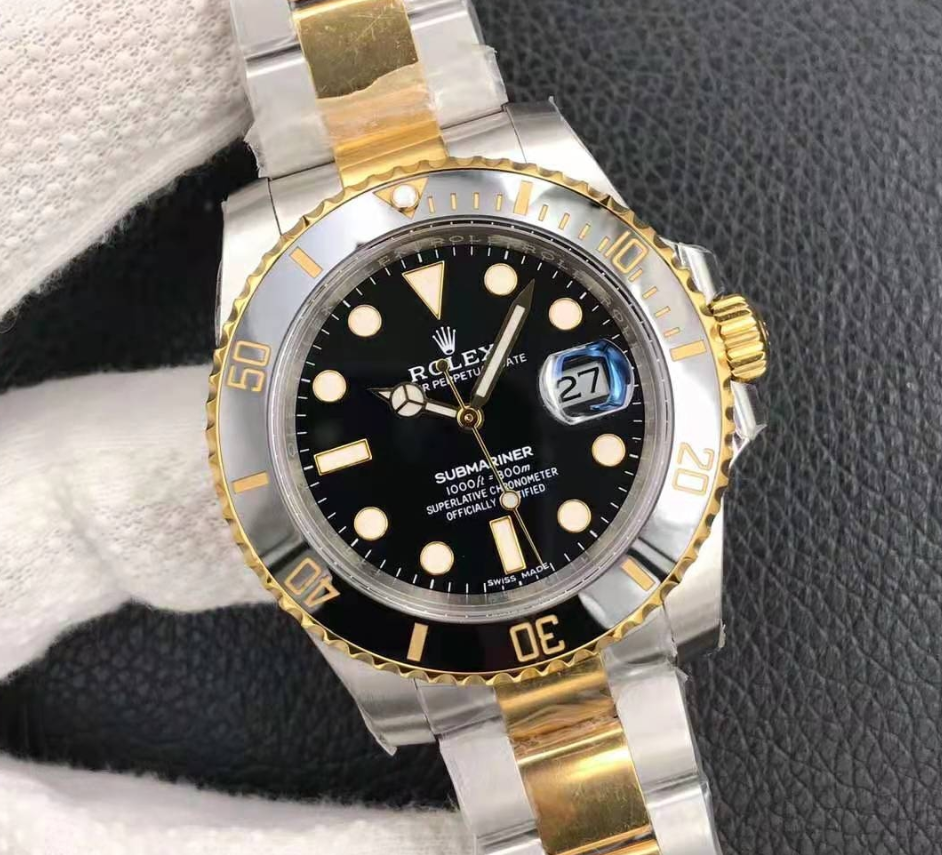
Two-tone is close but not closed. Roughly 10 grams separates a genuine gold-and-steel piece from a well-weighted replica, and about 10g of that comes down to one thing: the genuine’s centre bracelet links are solid 18K gold, and the replica’s are steel with gold plating over the top.
Platinum is where it falls apart. Honestly, it always will.
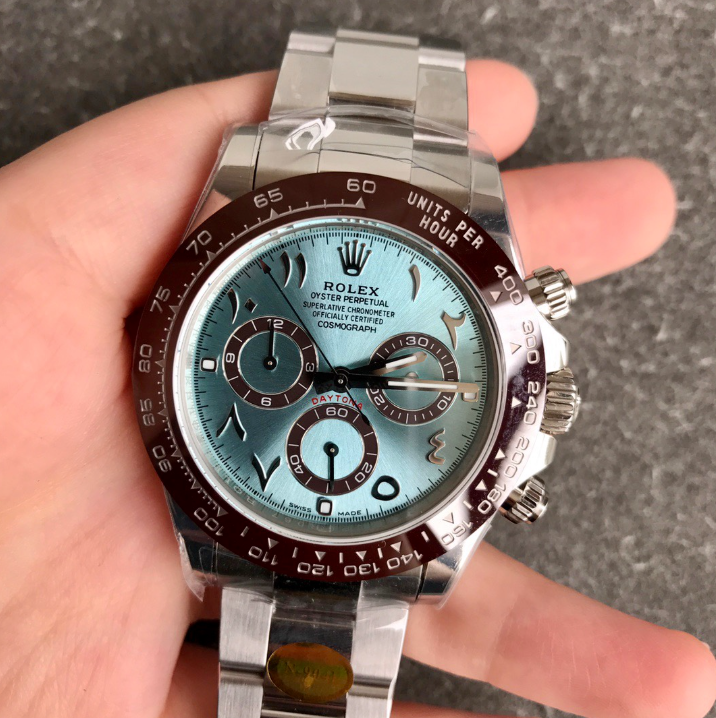
VSF’s ice blue Daytona went from V1 to a V2 that added roughly 20 grams to reach 164g, then a V3 that pushed to about 176g. Genuine, in 950 platinum, sits comfortably north of 200g. Even the most aggressive weighting leaves a gap you can feel. It has heft on the wrist. It doesn’t have that heft.
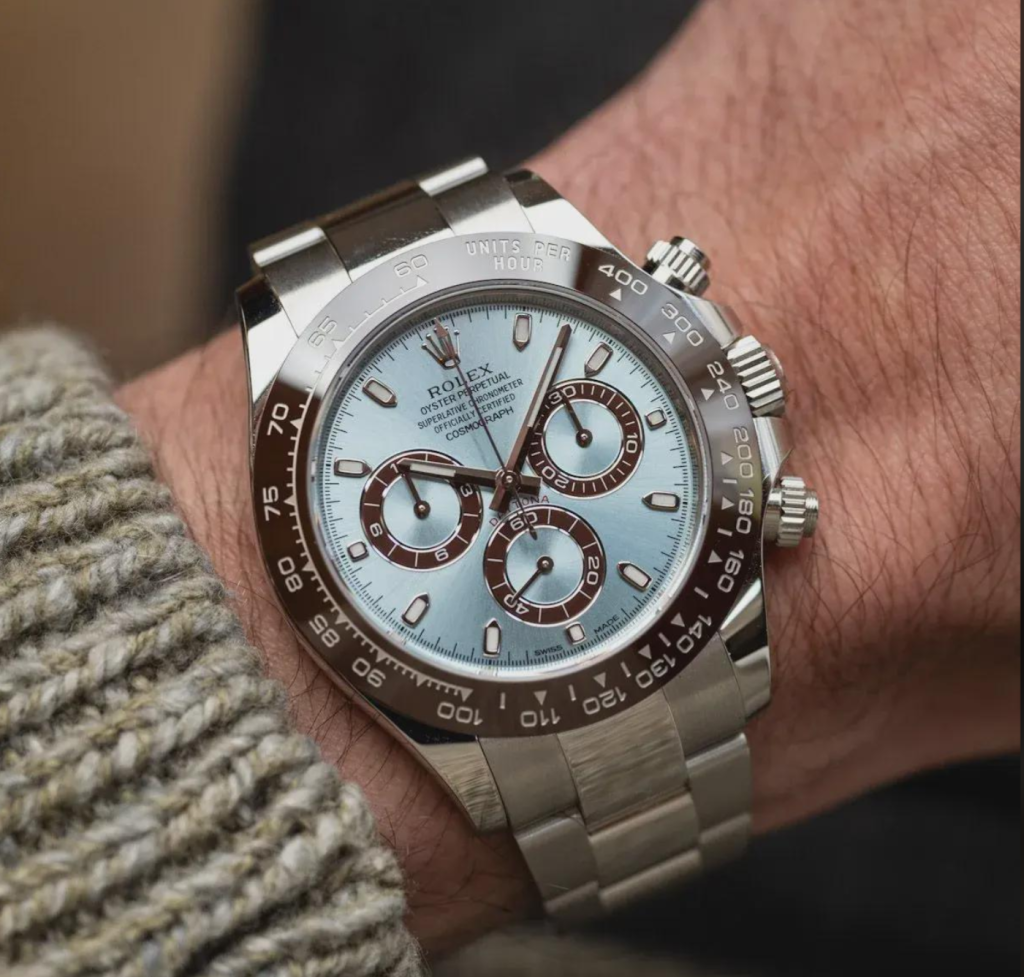
A reader emailed me back in April who’d handled a genuine 116506 at an AD before ordering the V3 — he said the V3 gets you 80% of the way there and once it’s on wrist you stop cross-checking. His words: close enough that he doesn’t think about it anymore.
Three Ways to Add the Weight — and Which One Flakes Off
This is the part that decides whether you’re happy in two years. And almost nobody asks about it.
Method one: a plate in the caseback. The cheap route. Bolt a slab of tungsten or heavy alloy inside the back of the case. Fast, adds grams, done. But it has two real problems. It can’t add enough — caseback builds routinely fail to reach genuine weight no matter how much they cram in. And it puts all the added mass in one place, so the watch goes top-heavy and the balance on the wrist feels wrong.
Skip it. The wearing experience is worse than the light version.
Method two: a lead or alloy slug. The bottom of the market. Crude mass shoved inside. Worse than that, the weighted alloy cases used in these builds can’t be re-polished or gold-capped later, and they discolour, oxidise and peel with wear. Once it starts flaking, there’s nothing to do about it.
Hard pass.
Method three: build the density into the case itself. This is what actually works. Rather than adding a part, the case is constructed from heavy material throughout — VSF’s V2 ice blue Daytona uses a case fabricated from 904L steel and tungsten steel welded together, and elsewhere the same principle shows up as tungsten packed inside a fluted bezel. Mass is distributed the way it is in the genuine, so the balance is right. Case geometry doesn’t change. And crucially — no plate, no coating, nothing to separate and peel.
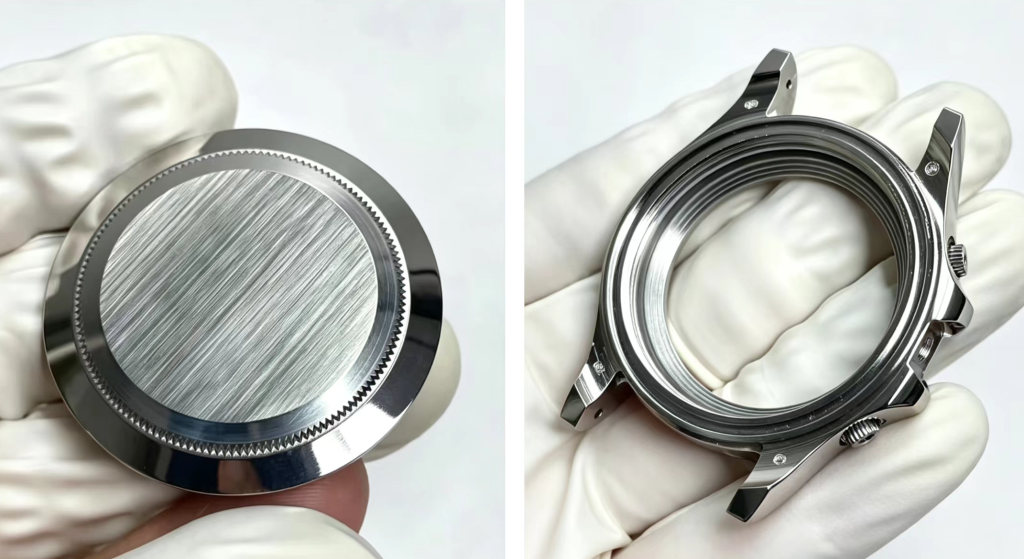
The peeling issue is not theoretical. It’s the single biggest trap in this category.
There are factories advertising 210+ gram builds using solid tungsten stock, and those watches peel and corrode with wear. Buyers chase the impressive number, get the number, and end up with a flaking watch a year later — no after-sales to call, no fix available.
Real talk, against that: VSF’s V1 ice blue weighting has no peeling reports, and their white Yacht-Master ran from V2 weighted through V3 heavy-weighted with none either. CBD is the other name worth knowing here — their weighted work holds up without peeling or discolouring, and their V9 can take repeated gold-capping on top, which adds both quality and weight. Two independent build approaches, both durable.
So the question to ask a seller isn’t “is it weighted.” It’s “how is it weighted.”
Caseback plate, or built into the case? That one question separates a watch you’ll still like in three years from one you won’t.
Where the Missing Grams Hide: Nobody Weights the Bracelet
Here’s the structural limit. Once you see it, you’ll understand why the remaining gap never quite closes.
Factories weight the head. They don’t weight the bracelet or the clasp. VSF states this plainly about their weighted Daytonas — head only, bracelet and clasp untouched.
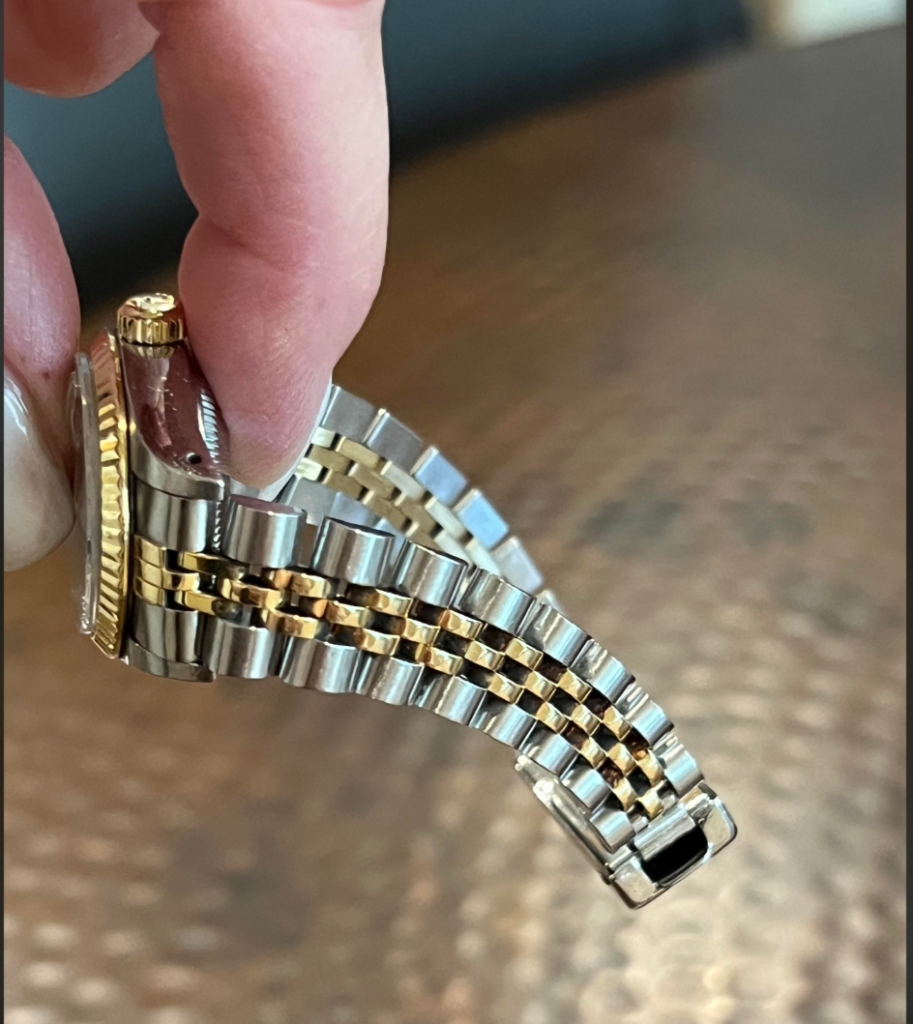
On a genuine two-tone, the centre links running down the middle of the bracelet are solid 18K gold. That’s a substantial share of total mass, sitting on a part of the watch nobody has weighted. Which is exactly why two-tone stalls around a 10-gram deficit no matter how well the head is done.
There’s a partial fix if it bothers you.
Weighted clasps exist as an aftermarket part — tungsten-cored with a steel outer shell, adding around 40 grams. Externally it’s nearly identical to a standard clasp, possibly a millimetre longer. It moves the total meaningfully and puts the mass at the far end of the bracelet, which helps balance rather than hurting it.
One counterintuitive note before you get enthusiastic: two-tone shouldn’t be weighted too aggressively. Push a two-tone case to full heavy-weight spec and the total overshoots the genuine, because the genuine’s own gold content is only partial. Two-tone wants a moderate V2-level treatment, not the maximum. Solid-colour gold and platinum are where heavy weighting belongs.
The Problem Nobody Solved: the Plating
Weight is engineering. Engineering got there.
Colour is chemistry, and it hasn’t.
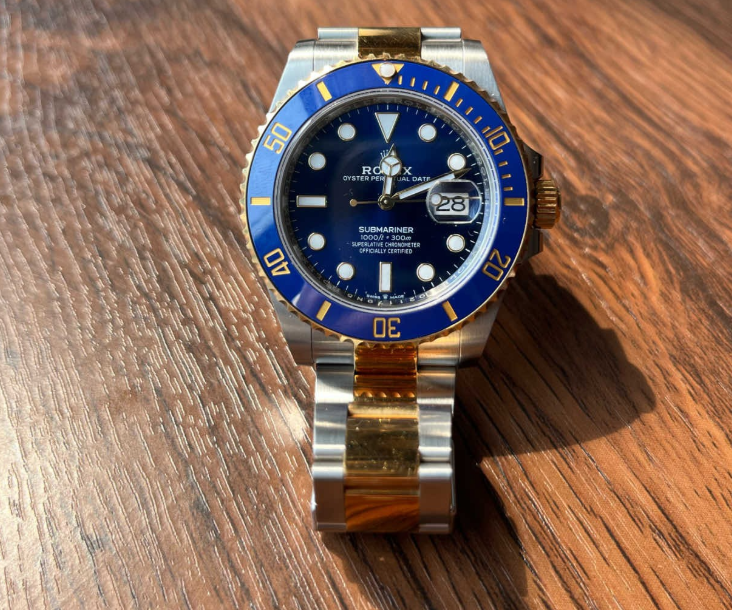
Rose gold and yellow gold on a replica are electroplated. Plating wears. Typical life on coloured metal plating runs 1–2 years before visible fading, stretching to 3–5 with careful treatment. And it doesn’t only fade with time — sweat, hand soap, perfume and general chemical residue sitting on the surface will oxidise the finish and turn it dark.
Quality varies but the ceiling is low across the board. OR Factory’s two-tone Seamaster showed darkening on brand-new pieces. VSF’s plating quality is comparable to OR’s, which means comparable exposure to the same risk. This isn’t one bad factory — it’s the process.
A buddy of mine in Florida bought a rose gold Sub back in 2023, wore it hard through a summer of pool days and gym sessions, and by month eight the crown guards had gone visibly darker than the case sides. Nothing wrong with the watch. Just how plating behaves when it meets chlorine and sunscreen.
Three practical responses, in ascending cost:
- Buy white gold or platinum colourways. No coloured plating, nothing to fade. If the reference exists in a white version and you’re on the fence, this removes the problem entirely.
- Buy from a factory that plates well and get it gold-capped. CBD’s plating reads accurate rather than obviously fake, and their cases accept repeat capping — which improves colour longevity and adds weight at the same time.
- Have it capped in real 18K. The proper fix. Colour matches the genuine and it survives daily wear and scratches. Costs accordingly.
If you want gold tone with none of this hanging over it, a full 18K case is the only real answer — and at that point you’re spending five figures and buying something that holds resale value. That’s a different purchase entirely.
What to Check Before You Buy a Weighted Gold Replica
Ask how it’s weighted, not whether. Case-integrated is what you want. Caseback plate means top-heavy balance and a weight that still won’t reach spec. If the seller doesn’t know, they haven’t handled the watch.
Be suspicious of a headline weight number. A factory quoting 210+ grams on a platinum piece has probably used solid tungsten stock, and that’s the construction that peels. Correct weight with durable construction beats maximum weight every time.
Check the hallmark. Genuine solid gold, rose gold and platinum references carry precious-metal hallmarks. Most two-tone replicas have no hallmark at all — a genuine two-tone doesn’t get one either, so its absence is correct there, but on a solid-gold reference it’s a giveaway to anyone who thinks to look. Some builds do stamp the clasp; VSF’s weighted ice blue carries a PT950 mark inside.
Look at the clasp surface finish. Small tell, reliable one. Serious factories give the clasp a brushed treatment. Smaller operations ship it polished bright, because polishing is cheaper than brushing.
Accept the platinum gap. If you’re buying an ice blue Daytona, you’re getting a watch with real presence that still won’t match a genuine on a scale. Everything else about VSF’s V2 is right — case shape unchanged by the weighting, brown ceramic bezel accurate, radial dial texture well reproduced, deep bezel engraving. Just know where the ceiling is before you pay.
Bottom line: weight got solved, plating didn’t.
Buy solid-colour gold and platinum for the weighting work, buy white metal if you want to skip the plating question altogether, and always ask how the mass got in there before you hand over money. If you want the gold look without any of this, the Day-Date 40 in olive green is worth a look — same presence, none of the plating anxiety. Whichever way you go, find a seller who’ll answer the construction question straight and stands behind a real warranty.