
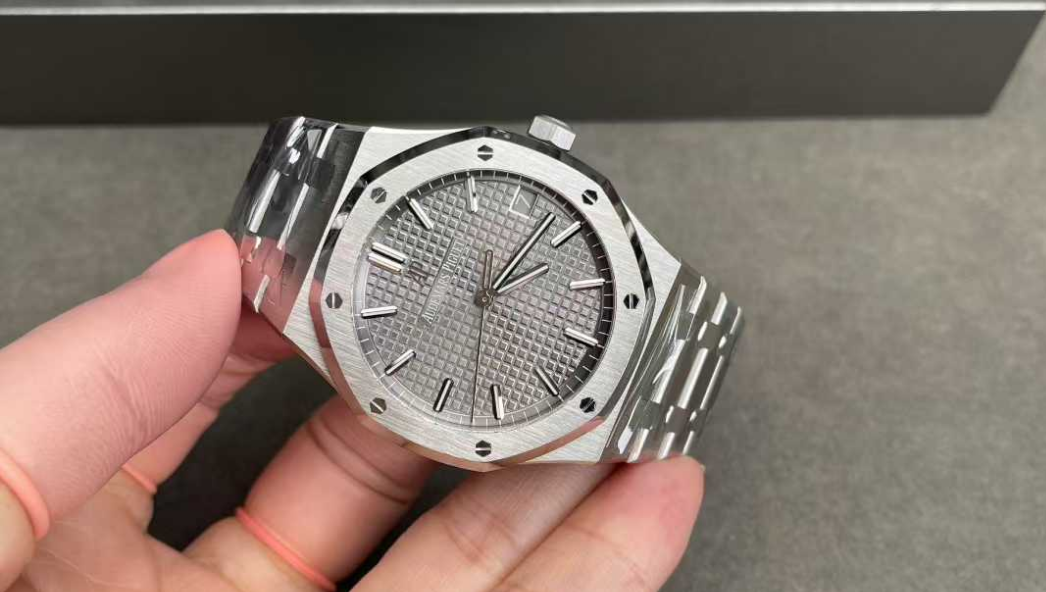
VSF Royal Oak 15500 Review — VSF’s First AP and Why It Changes Everything in 2026
VSF just entered the AP game — and they didn’t come quietly
Every factory in this industry does a few things well and a lot of things just okay. VSF owns Rolex Subs and Omega Seamasters. ZF owns Panerai. APSF owned Audemars Piguet — until they got raided in April 2026 and the lights went out for good.
So when VSF dropped the Royal Oak 15500 earlier this year — their very first AP reference — it wasn’t just a product launch. It was a land grab. The AP market had no credible king for the first time in years, and VSF walked in with a Dandong 4302, a correctly tooled 41mm case, and enough dial detail to embarrass the factory that held that crown for half a decade.
I’ve had one on my desk for three weeks now. Grey dial, 15500ST.OO.1320ST.02. Here’s the full breakdown.
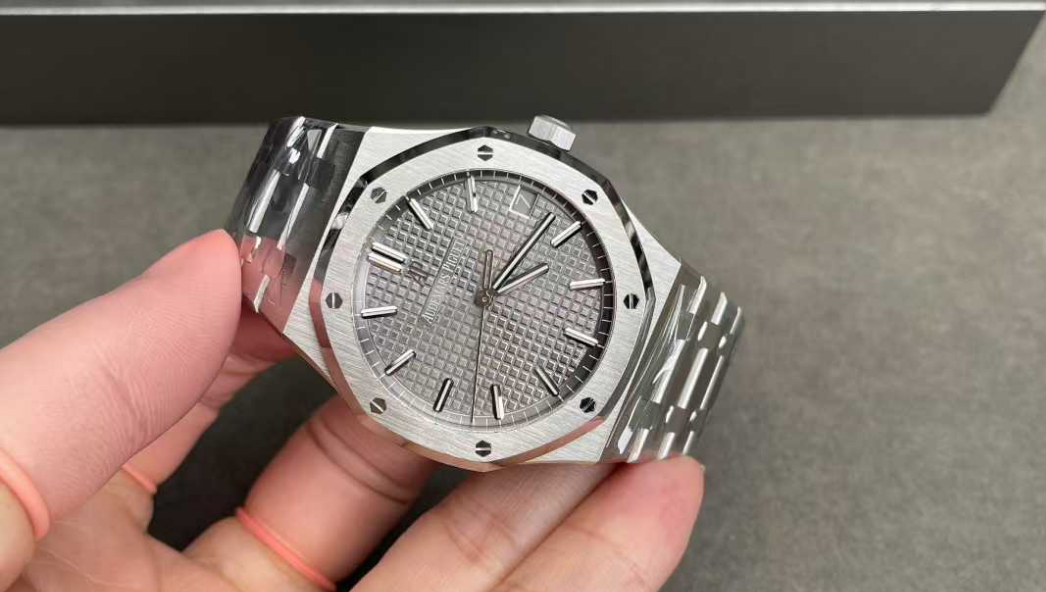
Specs and dimensions — what you’re actually getting
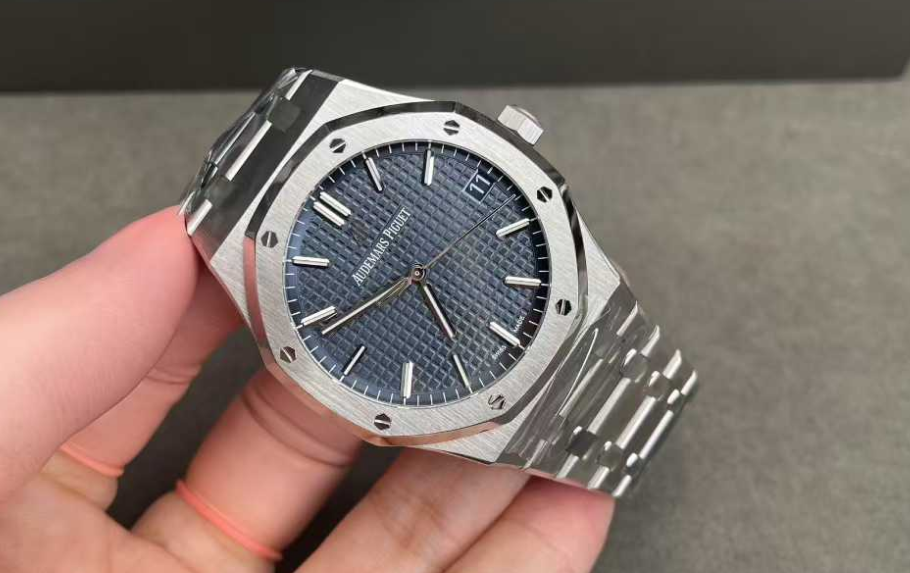
Let’s start with the numbers. The VSF 15500 measures 41mm in diameter and 10.4mm thick — both matching genuine specs exactly. Lug-to-lug is 50.4mm, or 52.4mm if you count the first bracelet link. Total weight comes in at 171.2 grams on the 316L stainless steel bracelet with sapphire crystal.
Inside sits the Dandong 4302 movement — VSF’s clone of the genuine Caliber 4302. The gen runs at 28,800 vph with 70 hours of power reserve, stop-seconds, and instant date quickset. The Dandong matches all of those specs. Power reserve tests I’ve seen consistently hit 68-72 hours on a full wind.
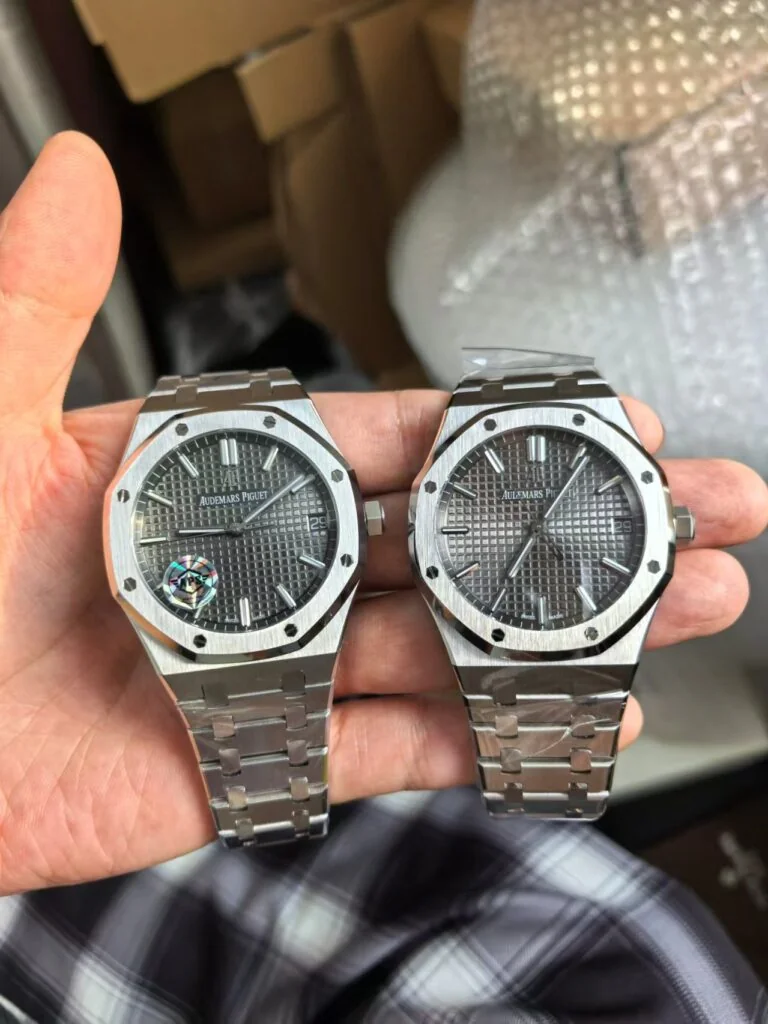
Two colorways available right now: grey (15500ST.OO.1320ST.02) and blue (15500ST.OO.1320ST.01). White and black haven’t been released yet.
| Spec | VSF 15500 | Genuine 15500 |
|---|---|---|
| Case diameter | 41mm | 41mm |
| Thickness | 10.4mm | 10.4mm |
| Lug-to-lug | 50.4mm | 50.4mm |
| Weight | 171.2g | ~175g |
| Case material | 316L steel | 904L steel |
| Crystal | Sapphire | Sapphire |
| Movement | Dandong 4302 | AP Cal. 4302 |
| Power reserve | ~70h | ~70h |
| Beat rate | 28,800 vph | 28,800 vph |
| Water resistance | Daily splash-proof | 50m |
The Tapisserie dial — where VSF actually surprised me
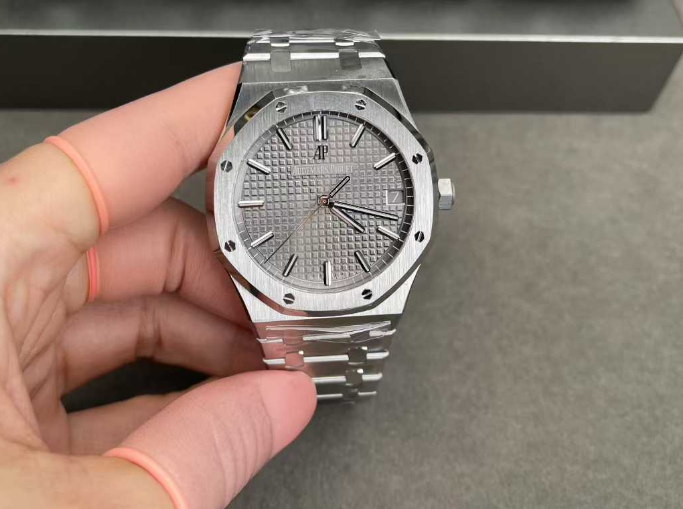
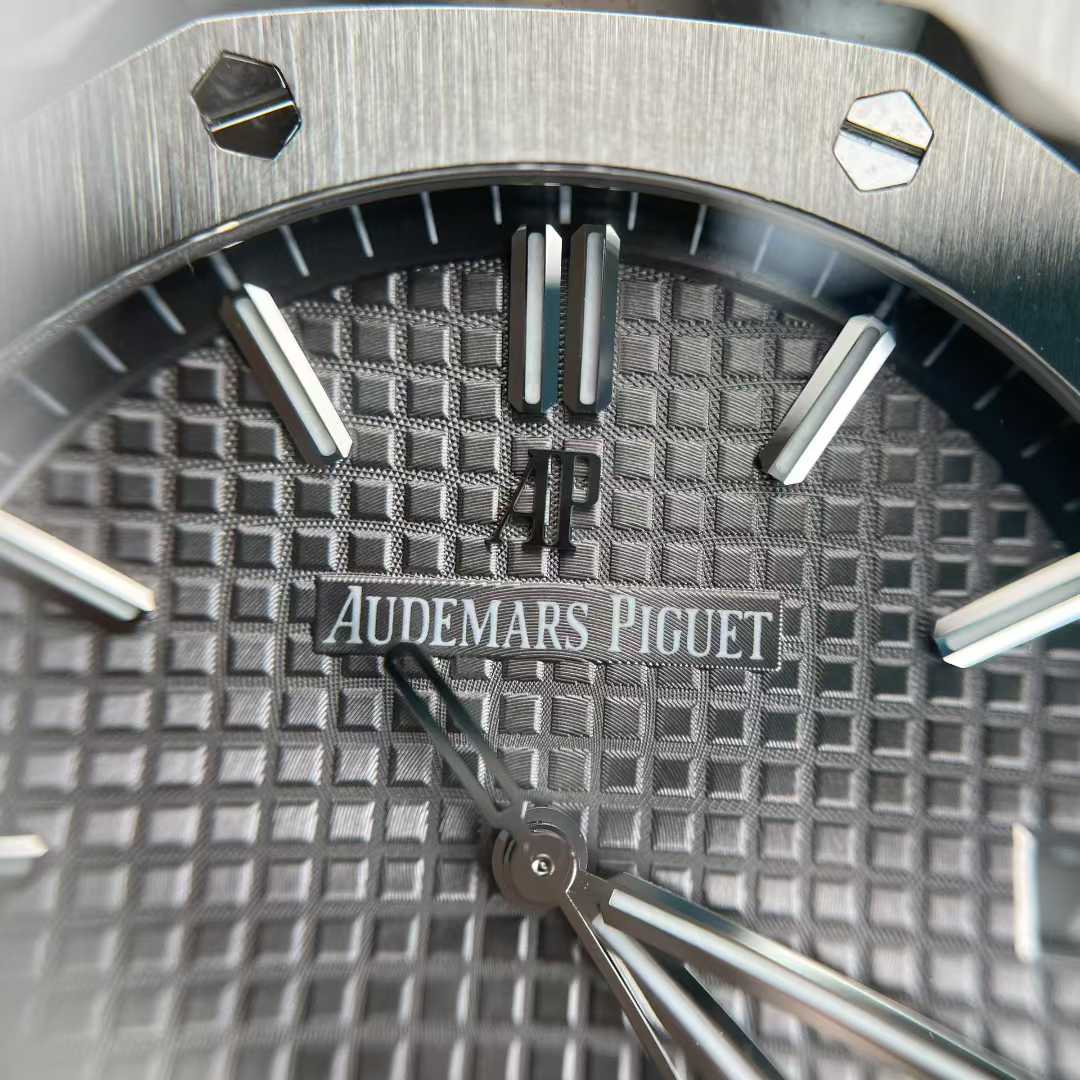
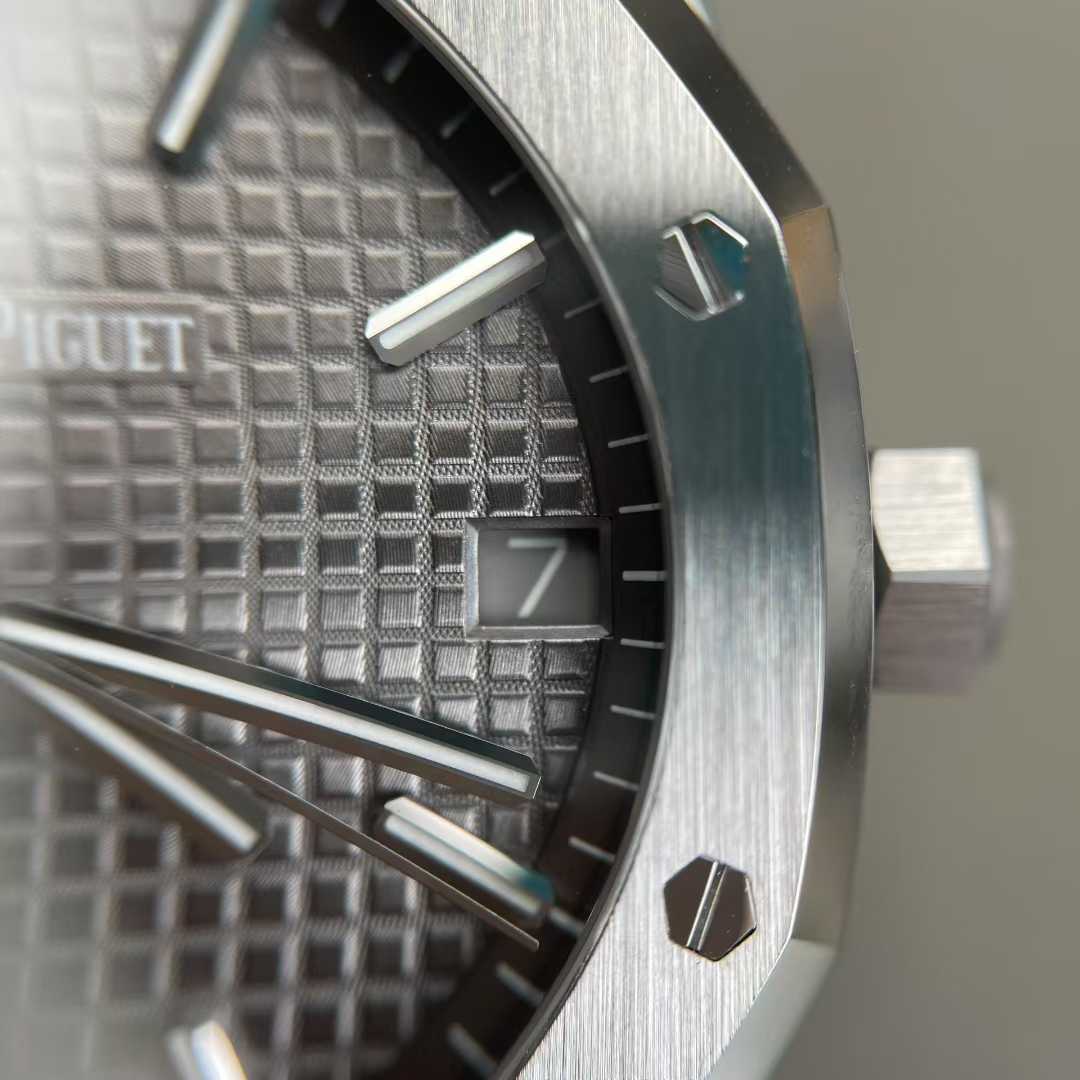
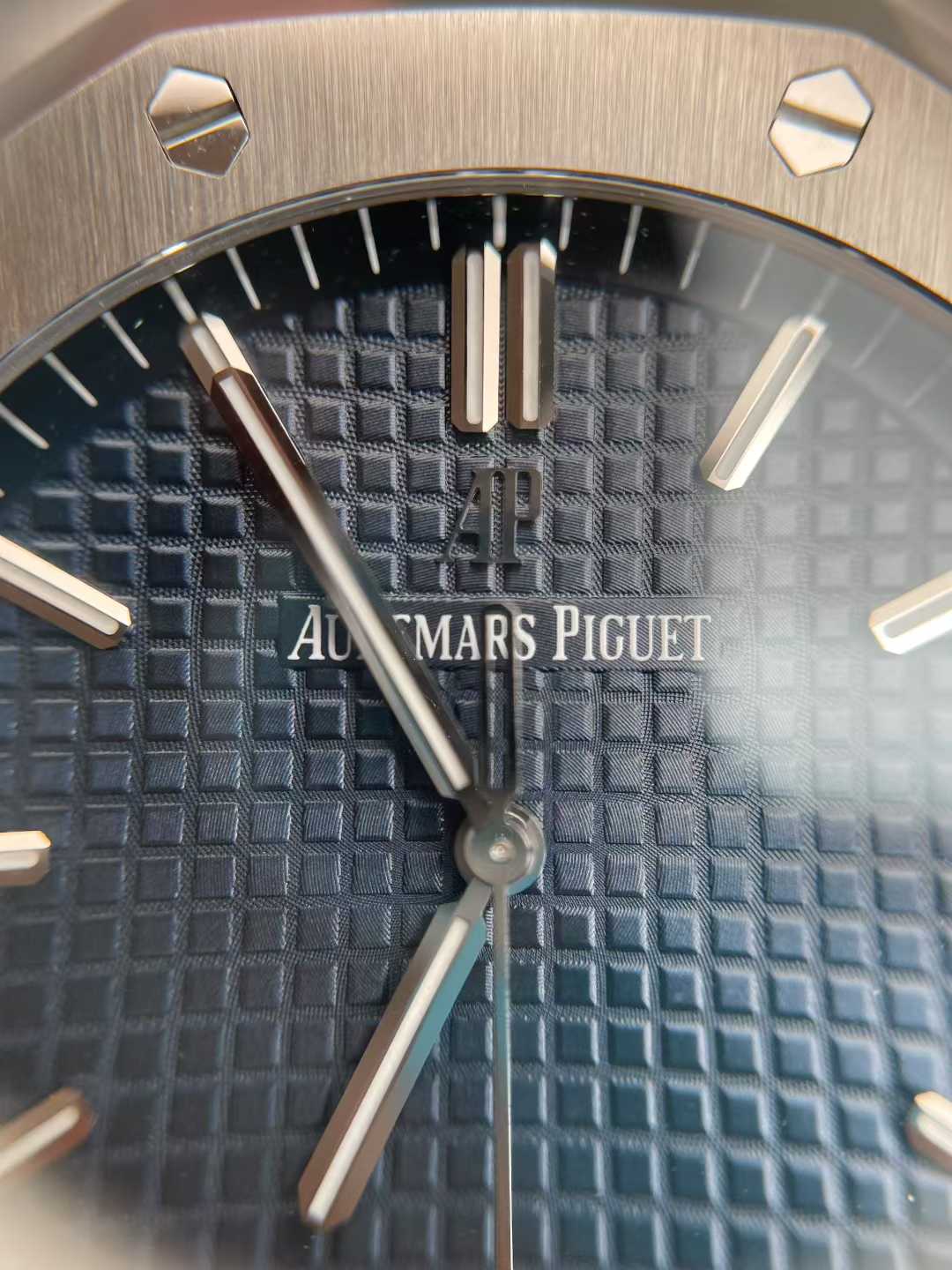
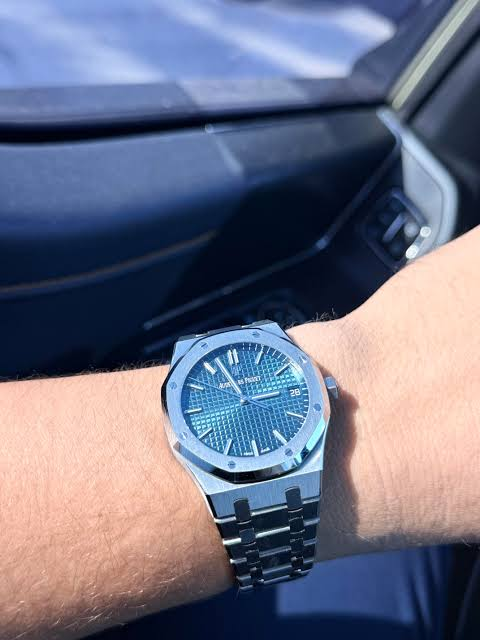
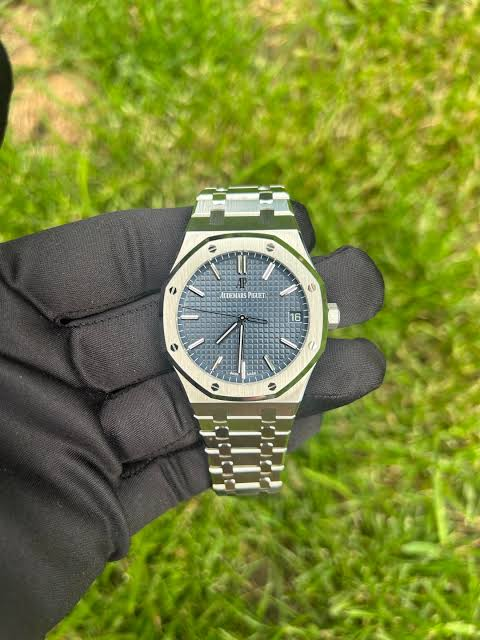
The Tapisserie pattern is what makes or breaks a Royal Oak rep. Get the waffle grid wrong and the watch looks like a toy. APSF had five years to refine their version. VSF showed up with a first-gen dial that already competes on several fronts.
Here’s what I’m seeing on the grey dial specifically:
The texture is silk-like and soft. Not the aggressive metallic flash you get on an APSF. Each individual square in the grid has a gentle slope on all four edges with crosshatch lines extending to the borders — VSF counts 12-14 line strokes per square, which matches genuine spec. Most factories land at 10-12.
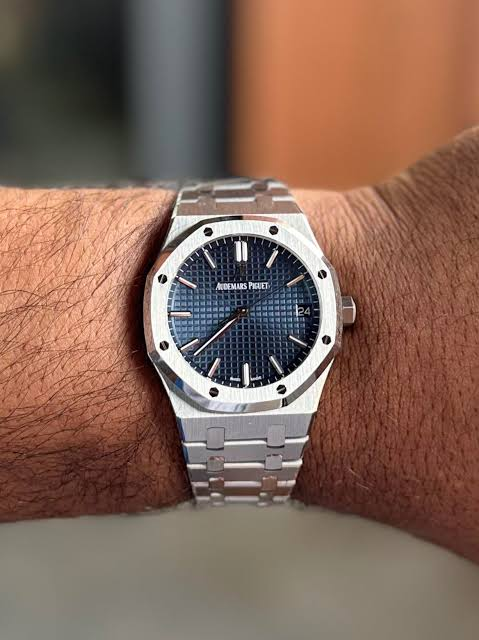
The light play is different from APSF in a way that actually favors VSF. The genuine 15500 blue dial isn’t supposed to be blindingly reflective under indoor light — it stays subdued indoors and comes alive under direct sunlight. APSF’s blue ran hot under every light source. That deep metallic flash with a purple tint looked cool in photos but wasn’t accurate. VSF’s blue sits quieter, and the light sweeps across a larger surface area when you rotate the dial. Closer to how the real thing behaves.
The grey dial is where VSF really pulled ahead. APSF’s grey was always too dark — almost charcoal. GF had the same problem before them. VSF went lighter and warmer, and it’s noticeably closer to the genuine warm silver-grey tone.
Dial details — indices, hands, date window, and AP logo
Beyond the Tapisserie pattern, the dial has a stack of smaller details that separate VSF from APSF. Walking through them one by one:
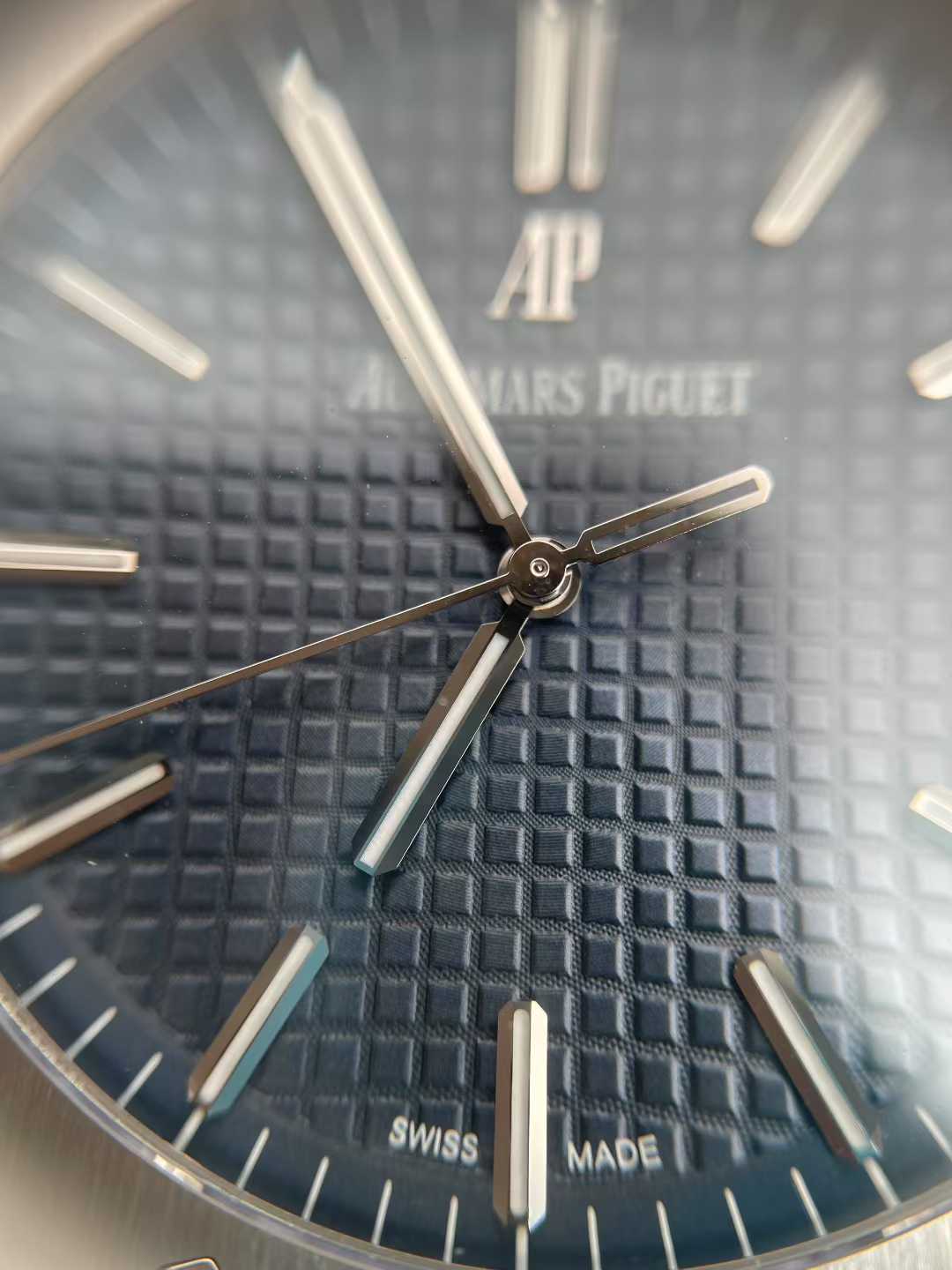
Applied indices and lume. VSF’s applied hour markers have narrow lume fills — narrower than APSF’s. Compared against genuine reference photos, the narrower fill is more accurate. The lume compound itself has a slight warm yellow tint (like the genuine), while APSF went cool white. Under daylight both look fine. Under UV, VSF’s warm tone matches the gen better. Trade-off: APSF’s lume is actually brighter in the dark, even though the color is less accurate.
Hands. The hour and minute hands on the VSF have a solid center axis — the pivot point looks filled in and substantial. APSF’s hands have a visible concave depression at the center, almost like the axis is hollow. The genuine has a solid center. VSF got this right. Under 30x magnification APSF’s hands look cleaner and more precisely machined, but at wearing distance, the solid center wins because it reads as more substantial.
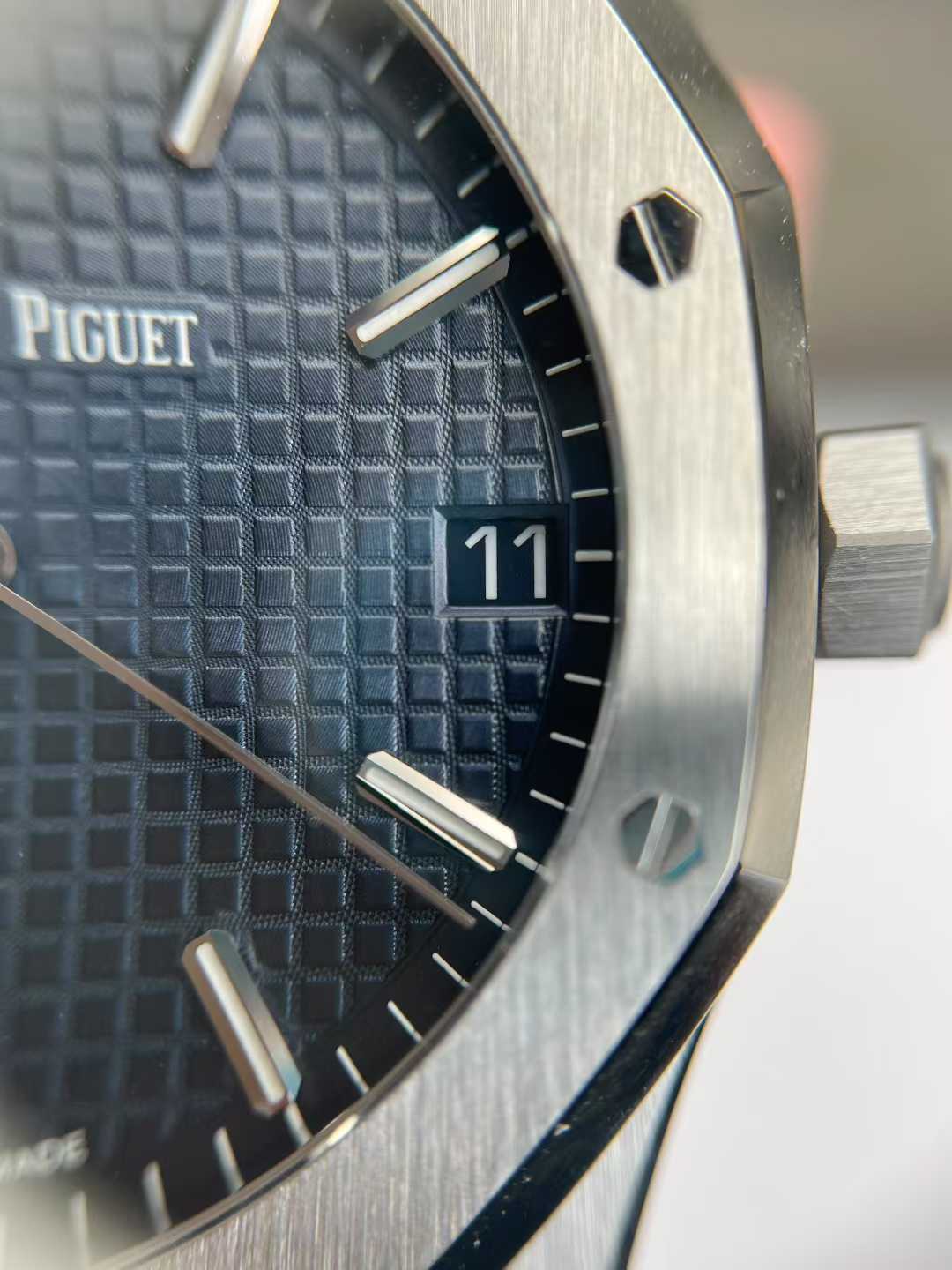
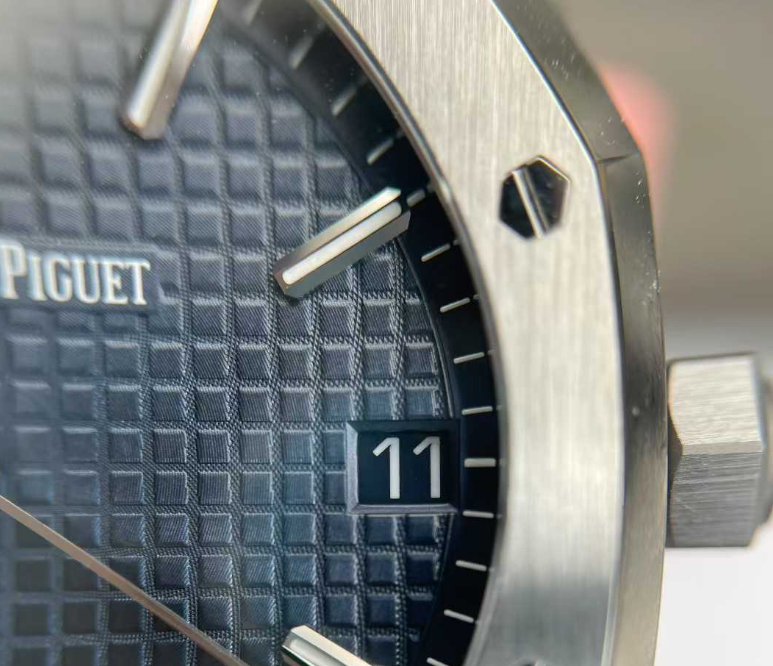
Date window. The VSF date disc has a warm yellow-grey base tone with slightly warm-tinted numerals. APSF went with a cool blue-tinted base and stark white numerals. Pull up a genuine 15500 and you’ll see the warm treatment — the date window isn’t supposed to look clinical white. Both are instant-change mechanisms, not the gradual creep you’d get from a modified Miyota. Snap at midnight, consistent with the genuine.
AP logo. This one’s been discussed a lot on the forums. VSF’s “AP” lettering is thinner and more refined — the “A” has a smooth, tapering curve at the peak, and the “P” is proportionally narrow. APSF’s version is noticeably thicker and cruder, with a bulky round “A” peak and a wide “P” stroke. Side by side with genuine reference images, VSF nails it.
Case, bezel screws, and bracelet — the stuff that matters on your wrist
Royal Oak case finishing is where most factories fall apart. The octagonal bezel with exposed screws, the alternating brushed and polished surfaces, the integrated bracelet — it’s a nightmare to get right. Here’s how the VSF 15500 handles it.
Bezel screws. Every screw on the VSF sits slightly recessed — sunk below the bezel surface, matching the genuine. APSF screws are supposed to do the same thing, but quality control was inconsistent. Some APSF units had individual screws sitting flush or even slightly proud. I’ve seen QC photos where one screw out of eight was visibly higher than the others. VSF’s consistency is better across units.
Case sides. The polished bevels running down the sides of the case are narrower on the VSF than on the APSF. Genuine Royal Oaks have narrow polished bevels. This is a detail most buyers won’t notice, but hold the two next to each other and the wider APSF bevel makes the case look slightly different in profile. VSF is closer.
Crown. The VSF crown has a deeper recess in the center with a more prominent front disc. Small detail, correct detail.
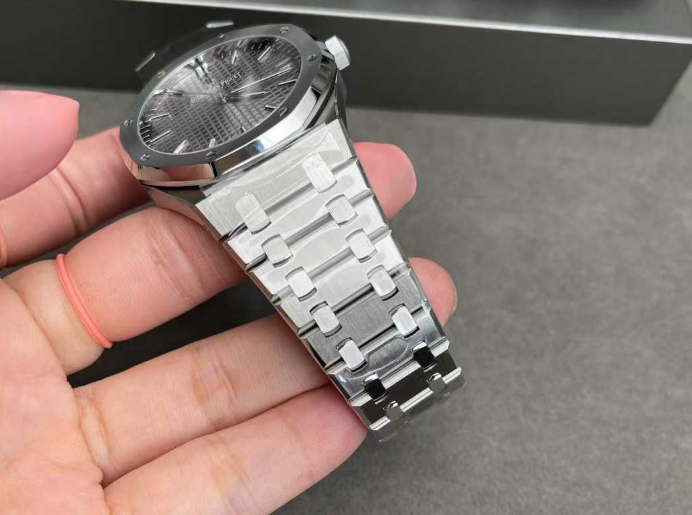
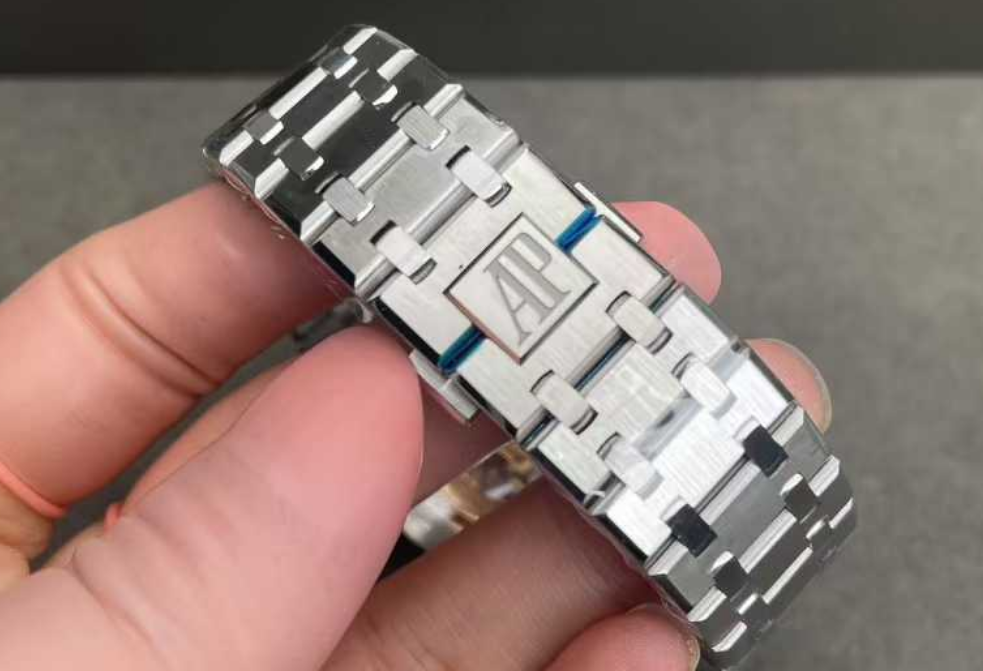
Bracelet. 23 links. That’s the genuine count. APSF shipped 24 links — one extra on each side, one removable and one fixed. APSF’s reasoning was probably that extra links help bigger wrists, but it’s not correct to spec. VSF went with the right number. The articulating end links (lugs) on the VSF have nearly 90 degrees of travel — the watch drapes over curved wrists naturally instead of sitting up like a bridge. APSF’s end links barely move. Some APSF units had uneven lug gaps that needed a watchmaker to grind down before the end link would articulate at all.
Bracelet brushing on the VSF is finer and more uniform than APSF. Both will catch arm hair in the link gaps — that’s a Royal Oak thing, genuine included.
The Dandong 4302 — what’s actually inside
This is the same movement family I covered in my VSF 15510 review, but the 15500 version has specific differences worth calling out.
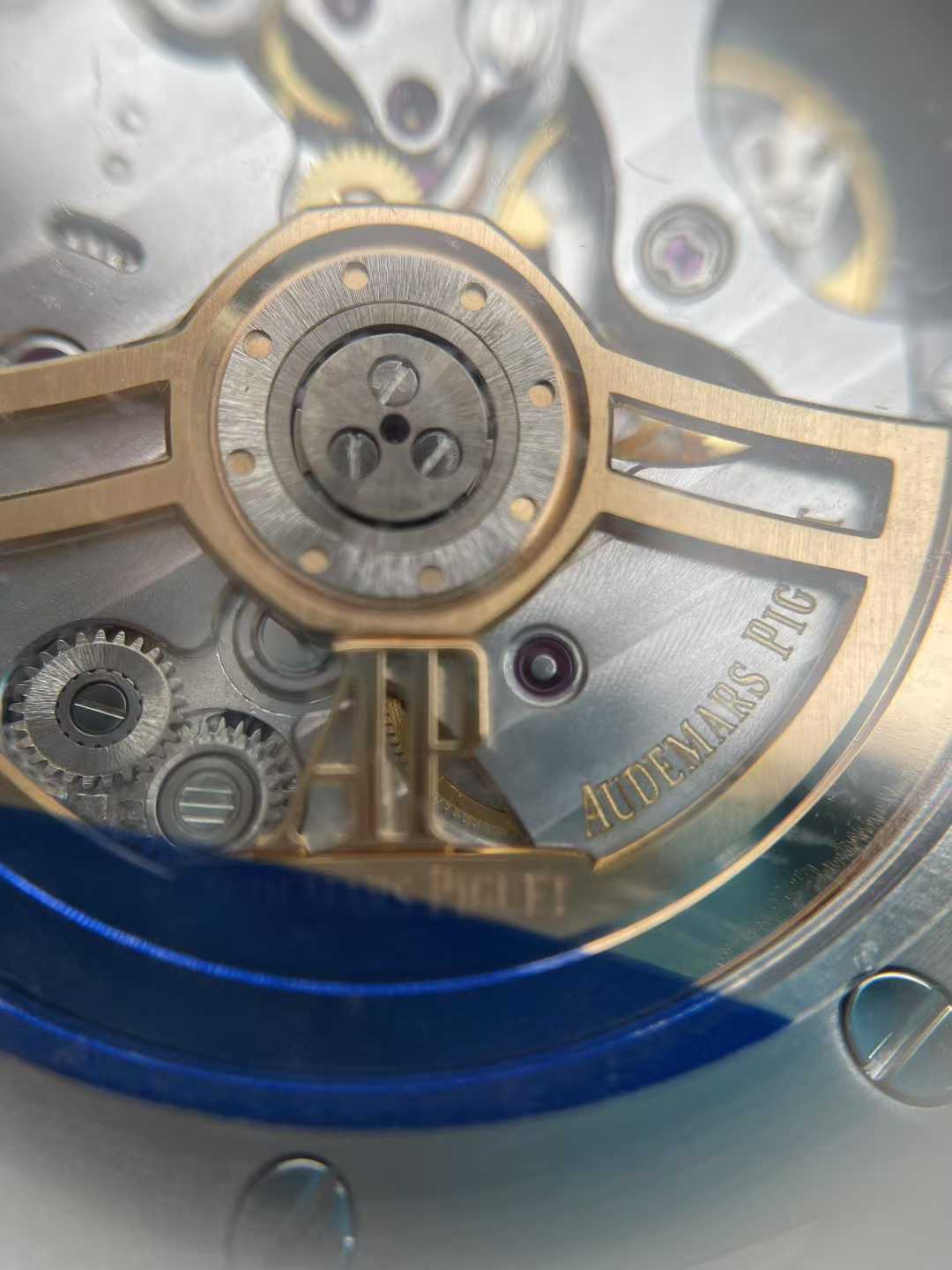
The Dandong 4302 in the 15500 is a fully integrated clone — all gears engage when you wind the crown, the rotor spins under its own weight, and the date changes instantaneously at midnight. This isn’t a decorated base movement with a cosmetic overlay. It’s a ground-up replica of the genuine Cal. 4302 architecture.
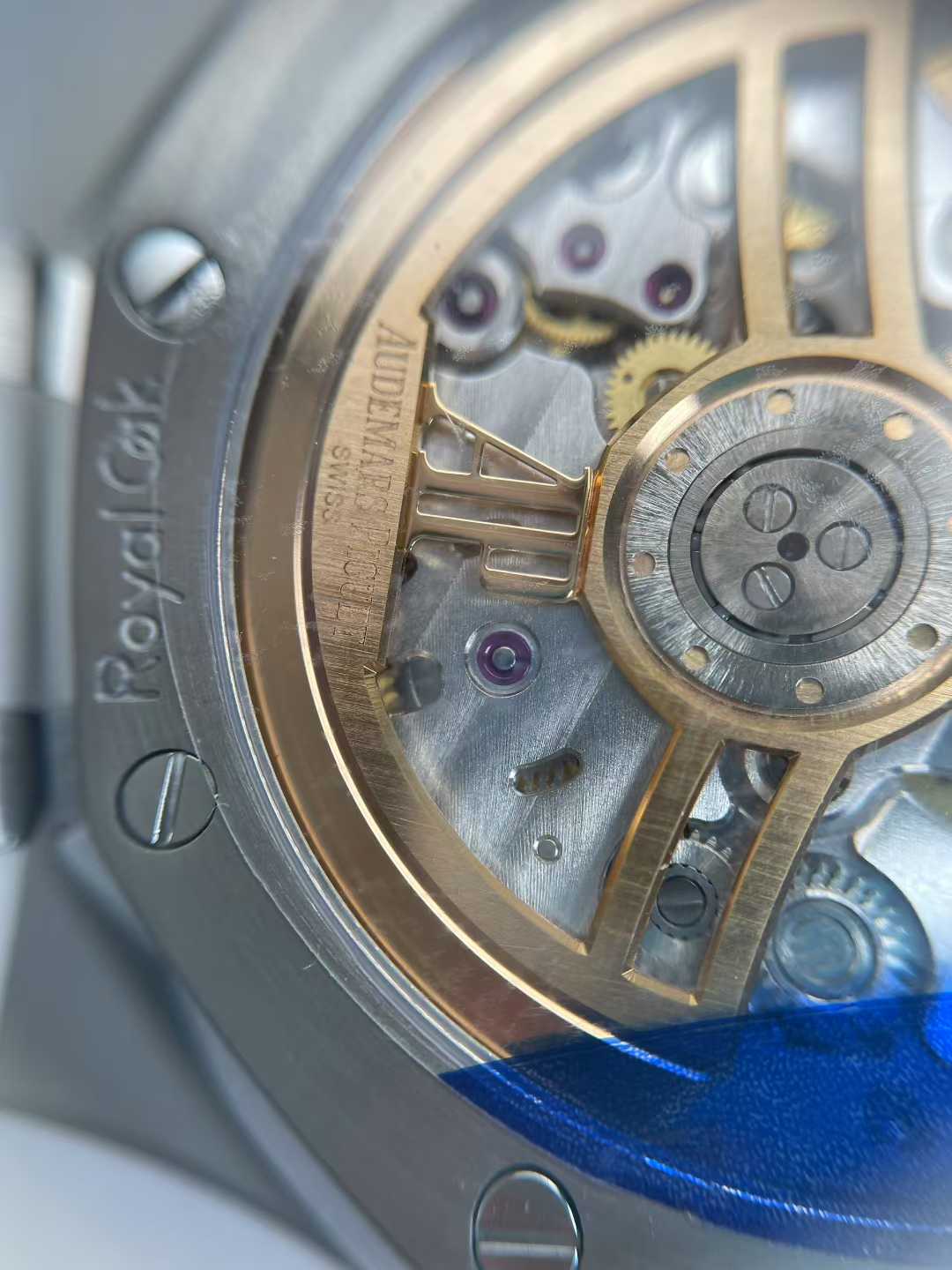
Key difference from APSF: the Dandong version uses ceramic ball bearings in the rotor — seven white ceramic balls versus APSF’s steel bearings. Ceramic is harder, smoother, generates less friction, doesn’t need lubrication on the bearing surface, and won’t develop play over time the way steel balls do. The practical effect: shake the VSF 15500 and you hear almost nothing. Shake an APSF and the rotor is audible.
Power reserve on the Dandong 4302 consistently hits 68-72 hours. APSF’s Shanghai 4302 tops out around 50 hours. That’s a full day’s difference. Leave the VSF on your nightstand Friday evening and it’s still running Monday morning. The APSF dies Sunday afternoon.
One specific detail for the 15500 reference: the rotor backplate has eight holes that show through in rose-gold tone. This is correct for the 15500 — the genuine 15500 has a transparent-style rotor with rose-gold visible through the holes. The 15510, by contrast, has opaque steel-colored holes. APSF used the same rose-gold transparent rotor on both references, which is wrong on the 15510 but actually correct on the 15500. VSF differentiates between the two references — rose-gold holes on 15500, steel on 15510. Both correct.
One thing VSF didn’t replicate: the genuine 4302 has a true free-sprung balance with weighted screws on the balance wheel. VSF hides a traditional regulator beneath the balance cock — it looks free-sprung from the caseback, but it’s technically regulated. APSF’s latest version actually had a true free-sprung balance with four weighted screws on the wheel, which is more accurate to the gen. That said, real-world timekeeping accuracy between the two is comparable. The free-sprung debate matters more to watchmakers than wearers.
VSF 15500 vs APSF 15500 — point by point
Since APSF 15500 clearance stock is still floating around at discounted prices, here’s the full comparison. Data sourced from 30+ comparison videos shot between January and April 2026, cross-referenced with genuine reference photos.
| Detail | VSF 15500 | APSF 15500 | Winner |
|---|---|---|---|
| Grey dial tone | Light, warm silver — close to gen | Too dark, almost charcoal | VSF |
| Blue dial behavior | Subdued indoors, alive in sunlight | Deep metallic flash in all light, slight purple tint | VSF |
| Tapisserie line count | 12-14 per square | 10-12 per square | VSF |
| Lume fill width | Narrow (matches gen) | Wide (not gen-correct) | VSF |
| Lume brightness | Moderate | Brighter | APSF |
| Hand center axis | Solid, filled-in look | Concave, hollow appearance | VSF |
| Date disc tone | Warm yellow-grey (gen-correct) | Cool blue-white | VSF |
| AP logo refinement | Thin, precise lettering | Thick, crude strokes | VSF |
| Bezel screw consistency | All recessed, consistent | Recessed but QC varies | VSF |
| Case side bevel width | Narrow (gen-correct) | Wide | VSF |
| Bracelet link count | 23 (gen-correct) | 24 (one extra per side) | VSF |
| End link articulation | ~90° travel, smooth | Barely moves, sometimes needs grinding | VSF |
| Rotor noise | Near silent (ceramic bearings) | Audible clatter (steel bearings) | VSF |
| Power reserve | ~70 hours | ~50 hours | VSF |
| Free-sprung balance | Hidden regulator (looks free-sprung) | True free-sprung with weighted screws | APSF |
| Rotor color consistency | Uniform across movement | AP engraving area shows color mismatch | VSF |
| Crown feel | Smooth, silky action | Adequate but stiffer | VSF |
APSF wins on two points: brighter lume and a true free-sprung balance. VSF takes everything else. And APSF isn’t making new watches — ever. If you’re buying APSF clearance, you’re buying a watch with no factory warranty path and a movement platform with a known 50-hour ceiling. I covered the full APSF situation in my APSF 2026 crackdown analysis.
15500 or 15510 — which reference should you actually buy?
VSF makes both. The existing community leans 15510 because it’s newer and gets more Reddit posts. But the 15500 has specific advantages worth considering.
The genuine Royal Oak 15500 was produced from 2019 to 2022. The 15510 replaced it. Cosmetically the differences are subtle: the 15510 updated the dial text from the “AP” abbreviation to the full “Audemars Piguet” name, revised the hand shape to a tapered design, and changed the rotor decoration from transparent (rose-gold holes) to opaque (steel-colored holes).
Dimensions differ slightly. The 15500 is 41mm x 10.4mm. The 15510 is 41.3mm x 10.7mm. Not a huge gap, but on a watch this design-intensive, a third of a millimeter changes the visual proportion. The 15500 wears slimmer and sits flatter.
Practically speaking, the 15500 is the quieter, more subtle Royal Oak. The 15510 has more online visibility because it’s the current gen production reference. If you care about wearing the “latest” — get the 15510. If you care about the cleaner proportions and don’t need to match current AP catalogs — the 15500 is the better-wearing watch.
Price is similar. Both VSF references land in the $650-850 range at trusted dealers.
What about OCTA Factory?
OCTA appeared in mid-2026 after absorbing APSF’s tooling, molds, movement plans, and supply chain. The pitch is that OCTA is the APSF successor — same DNA, new name.
The reality: it’s too early to call. OCTA inherited the Shanghai 4302 platform and the 4401 chronograph movement that APSF was developing for the 26240. Whether they can maintain APSF’s quality level — or improve on it — remains to be seen. No verified long-term data exists yet.
For now, VSF is the proven option with an established movement platform and years of Dandong reliability data behind it. OCTA is speculative. If you’re buying a Royal Oak today, in July 2026, VSF 15500 is the safe money. Check back on OCTA in six months when real-world units have been in the wild long enough to generate meaningful feedback.
Pricing and where to look
Current dealer pricing as of July 2026:
| Watch | Typical street price | Status |
|---|---|---|
| VSF 15500 (Dandong 4302) | $650 – $820 | Active production |
| VSF 15510 (Dandong 4302) | $700 – $850 | Active production |
| APSF 15500 (clearance) | $480 – $600 | End of life |
| OCTA 15500 (Shanghai 4302) | TBD | Early production, unverified |
The $150-200 gap between APSF clearance and a new VSF is the cost of a working warranty, a 70-hour movement, and a factory that still exists. Whether that’s worth it depends on how long you plan to keep the watch. If it’s a two-year rotation piece, APSF clearance is fine. If it’s a daily wearer you want running in year three and beyond, VSF is the rational play.
When shopping, ask for QC photos that clearly show three things: bezel screw alignment, bracelet-to-case fit at the end links, and dial centering. Any dealer who can’t provide those — move on.
Common questions
Grey or blue — which color for a first Royal Oak?
Blue is the iconic choice and the one most people recognize from AP marketing. Grey is more versatile, easier to dress up or down, and VSF’s grey dial tone is arguably more accurate to gen than their blue. If you already own a blue-dial watch, go grey. If this is your only dressy rep, go blue.
Will VSF release black or white 15500 dials?
Industry sources indicate both are planned but no confirmed timeline. VSF tends to launch colors slowly — they started with grey and blue on the 15500, then moved to green and blue on the 15510. Black and white 15500 dials will come, but don’t wait for them if you want to buy now.
Does 316L steel matter vs the genuine’s 904L?
On a Submariner, the steel grade debate has some substance because of corrosion resistance during water exposure. On a Royal Oak — which you’re not taking diving — 316L is perfectly fine. The visual and tactile difference between 316L and 904L is undetectable on a brushed-finish watch. Not a factor.
Should the hidden regulator bother me?
No. The hidden regulator means a standard watchmaker can adjust the timing with common tools. A true free-sprung balance requires specialized equipment and skill to regulate. For a watch you’ll eventually need serviced, the hidden regulator is arguably more practical — even if it’s less “authentic” under a loupe.
How loud is the rotor?
With the ceramic bearings, it’s close to silent. I can hear it faintly in a dead-quiet room if I deliberately swing my wrist. In any normal environment — inaudible. This was a real annoyance on the APSF with steel bearings, especially for people who noticed rotor noise on their Miyota-based reps. Not an issue here.
Ray’s Verdict
VSF Royal Oak 15500 — Final Score
Case & Dial: 9.0 / 10 — Tapisserie crosshatch count matches gen, grey dial tone finally accurate, AP logo lettering is best-in-class; minor gap in polish crispness at case corners vs genuine
Movement (Dandong 4302): 9.2 / 10 — 70h power reserve, ceramic rotor bearings, near-silent winding; hidden regulator instead of true free-sprung is the only technical demerit
Build Quality: 9.0 / 10 — 23-link bracelet correct to spec, bezel screw consistency strong across units, articulating end links with real travel; occasional minor roughness at case-bracelet junction
Value for Money: 8.8 / 10 — $650-820 for the best AP rep currently in production; justified premium over APSF clearance given the movement and warranty advantage
Overall: 9.0 / 10

How Bay Watch ?