ZF AP 26240 Free-Sprung vs APS 15400 — Is a Free-Sprung Balance Worth Paying For?
What “Free-Sprung” Actually Means — And Why Swiss Doesn’t Mean Free-Sprung
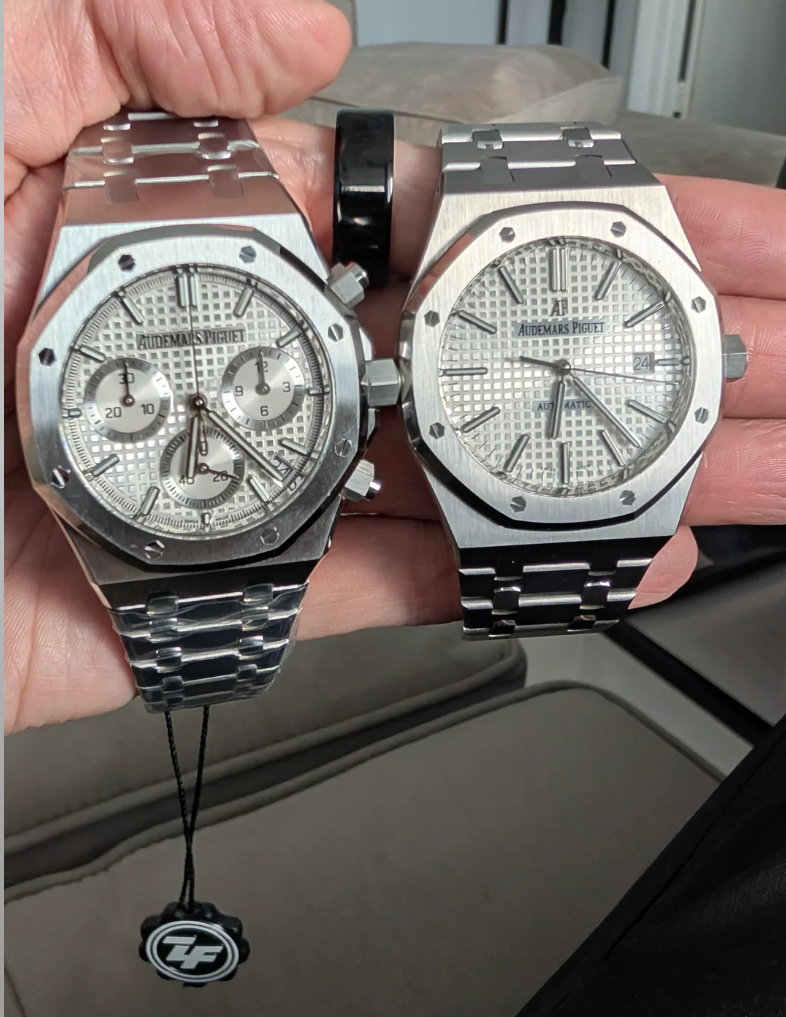
Guy on RepTime last week posted a ZF AP 26240 listing tagged “free sprung” next to an APS 15400, asking which to buy. The free-sprung label was doing a lot of heavy lifting in that thread.
Let me take it apart. Because most of what gets said about free-sprung balances in this hobby is flat wrong.
Two ways to regulate a mechanical watch. A regulated balance uses an index — a little lever that slides along the hairspring and changes its working length. Shorten it, watch runs faster. A free-sprung balance has no index at all. You adjust timing by turning weighted screws set into the balance rim, which changes the wheel’s moment of inertia.
Different animal entirely.
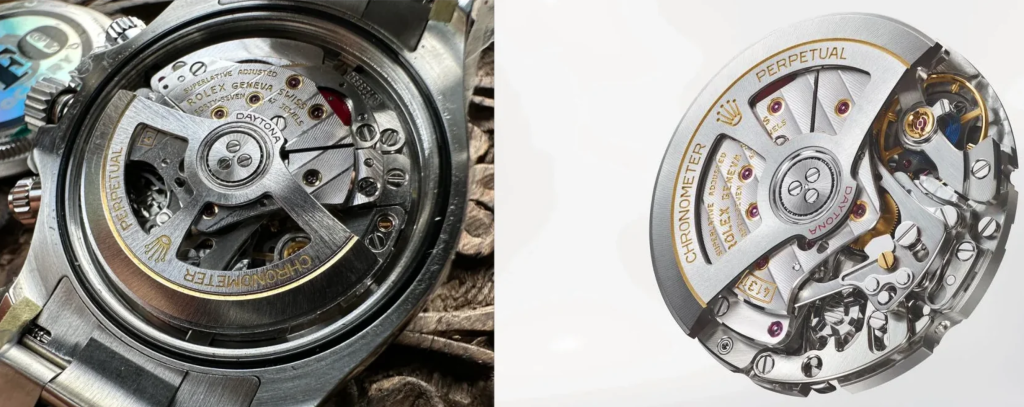
Free-sprung is generally a high-end trait. Rolex 3135, Cartier CL30, Patek Philippe 324, Jaeger-LeCoultre MH925 — all free-sprung, all in-house.
Now look at what’s missing from that list. ETA is regulated. The entire Sellita range is regulated. AP’s own 1863 is regulated. Buying “Swiss” gets you an index in nearly every case. So when a seller pairs “Swiss movement” with “free sprung” like they’re the same premium tier, that’s two unrelated claims stapled together.
Here’s the line I’d keep in your head. A high-end movement isn’t necessarily free-sprung, but a free-sprung movement is almost always high-end — and the reason is largely aesthetic. It looks like the real thing through a display back. That’s the honest appeal.
The APS 15400 and Its Dandong 3120 — Regulated, and Not Hiding It
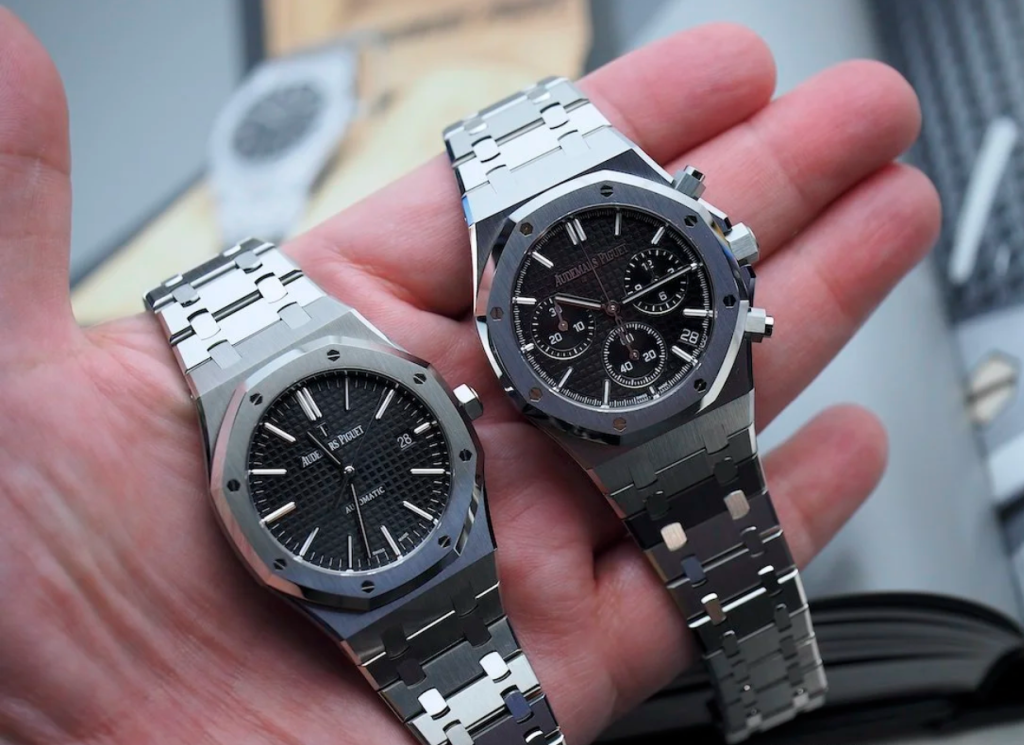
APS built its reputation on the 15400. They inherited JF’s 3120 access and rode it hard. Before that, most factories built the 15400 on a Miyota 9015 with a decorative bridge plate — and that approach has a tell you can see without opening anything.
The balance sits in the wrong place.
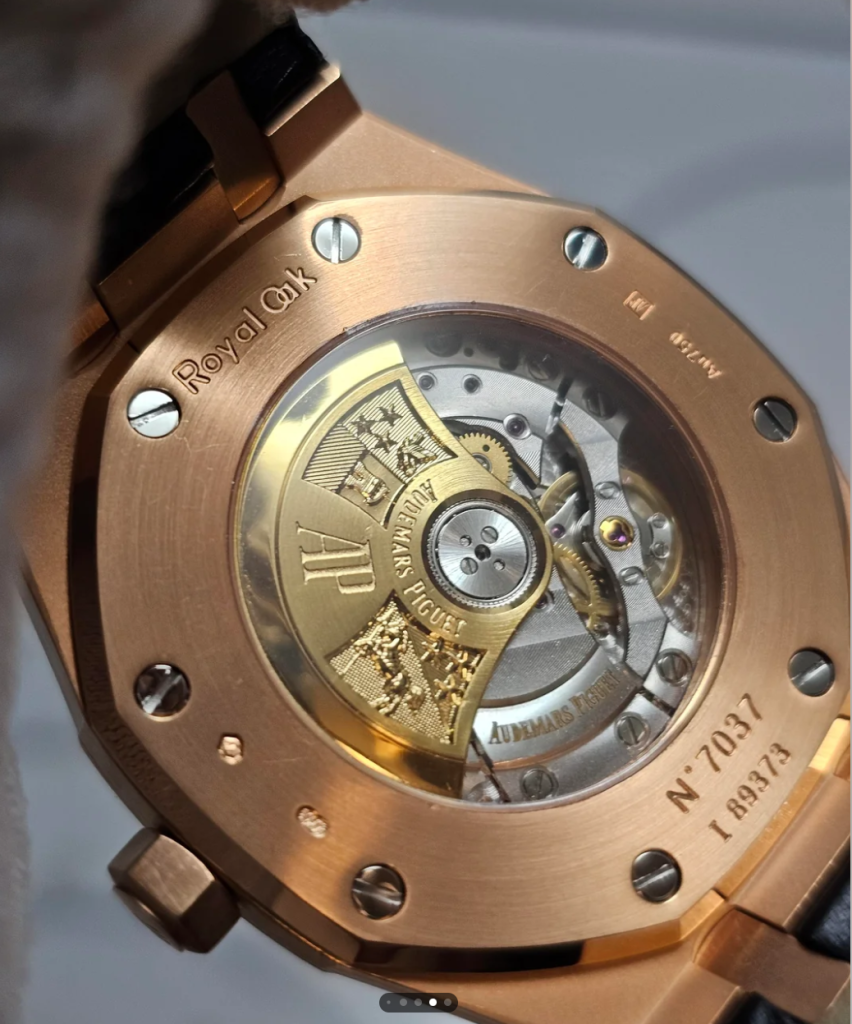
Genuine 15400 puts the balance wheel at roughly the 7–8 o’clock position. A 9015-based build can only get it to 6 o’clock. ZF’s 15400 has this problem — it’s a 9015 modified to look like a 3120, so the balance lands at 6 o’clock and the shock setting is a horseshoe type instead of the correct KIF.
Dead giveaway.
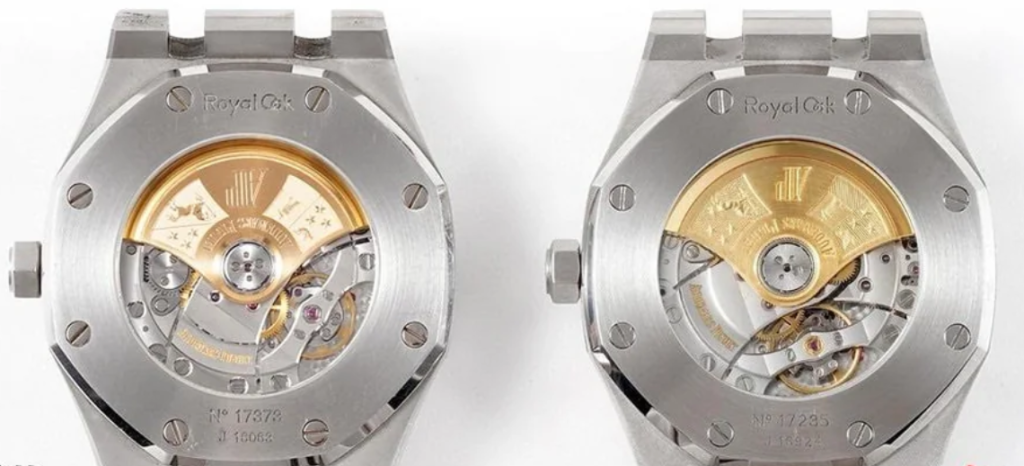
APS went with an actual tooled 3120. Balance at 8 o’clock, correct. KIF shock setting, correct. Every gear on the upper bridge actually turns, because it’s a real movement rather than a plate with fake wheels glued to the top. The case comes out at 9.7mm against ZF’s roughly 10mm — that 0.3mm comes from not carrying a decorative plate. Weight lands at 173g versus ZF’s 171g, and the genuine is heavier still, so APS is closer. The “AUTOMATIC” text at six is thicker on the APS and matches the genuine better.
| APS 15400 | ZF 15400 | |
|---|---|---|
| Movement | Tooled Dandong 3120 | Miyota 9015 + bridge plate |
| Balance position | 8 o’clock (correct) | 6 o’clock (wrong) |
| Shock setting | KIF (correct) | Horseshoe |
| Upper bridge gears | All functional | Decorative |
| Thickness | 9.7mm | ~10mm |
| Weight | 173g | 171g |
| Balance type | Regulated, bare rim | Regulated |
APS wins that fight on movement architecture. Not close.
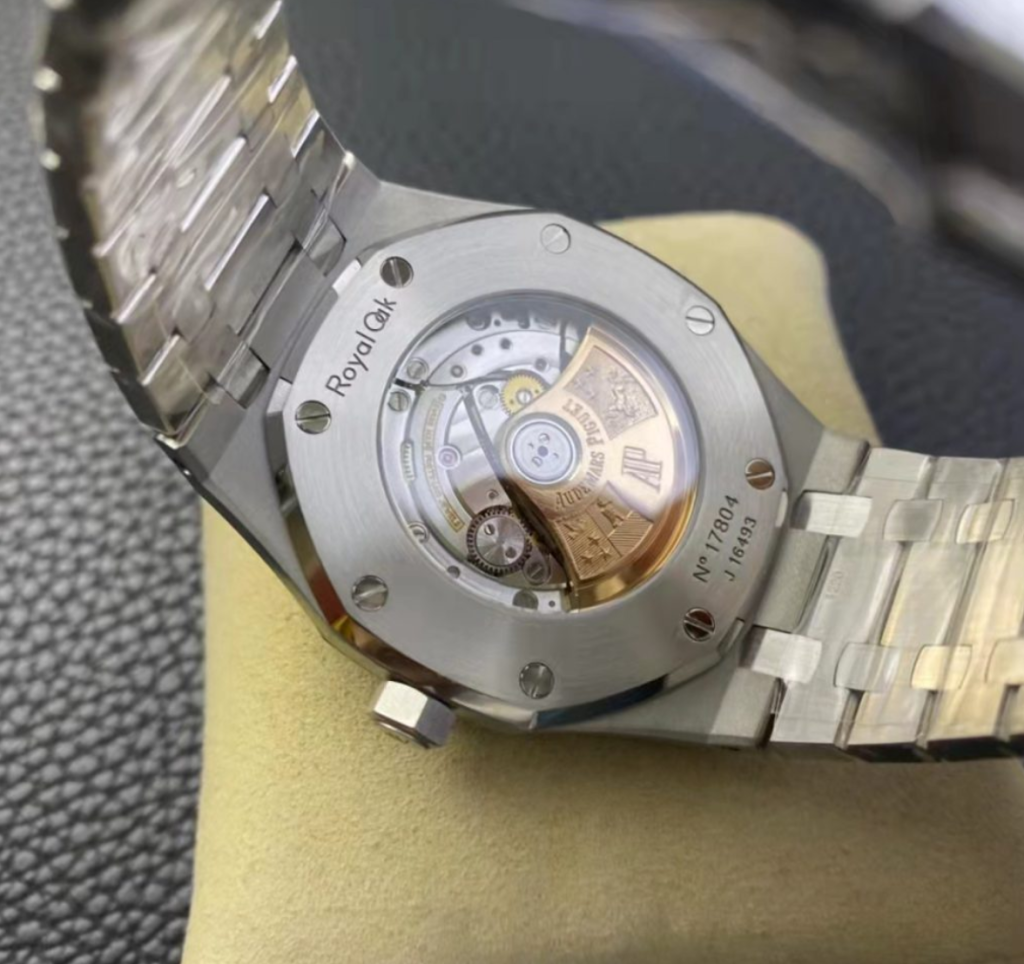
But here’s the part that matters for this article: the Dandong 3120 is regulated, and its balance rim is bare. Genuine 3120 carries four small adjusting weights on the rim. The Dandong version has nothing there — smooth metal. Side by side under a loupe, that’s the fastest tell between the two.
Beat rate is the other honest gap. Dandong 3120 runs at 21,600 vph — six beats per second. Common high-beat movements run 28,800, or eight. Lower frequency means slightly less timing precision, traded for durability and longer running. That’s a real engineering trade, not a defect. But it’s a difference.
One more thing worth knowing about the Dandong 3120. Dials, hands, and cases are interchangeable with the genuine 3120. Cuts both ways — a genuine movement can be dropped into this case, and the reverse has already happened in the wild. There are documented cases of a Swiss 3135 auto module being fitted onto a Dandong 3135 and passing authentication. If you’re buying secondhand, that’s the environment you’re operating in.
Buyer beware.
The 26240 and the 4001 Chronograph — What It Actually Fixed
Different watch, different problem. Royal Oak chronographs were the weak spot in this category for years, and the reason was the movement.
Early Royal Oak chrono builds ran a modified Shanghai 7750. Functions were wrong and thickness was wrong — not marginally, but obviously. The only way to get correct thickness and full function was to fit a genuine 1185, harvested out of a Cartier or Blancpain, at roughly $5,000 for the movement alone.
Not a replica purchase at that point.
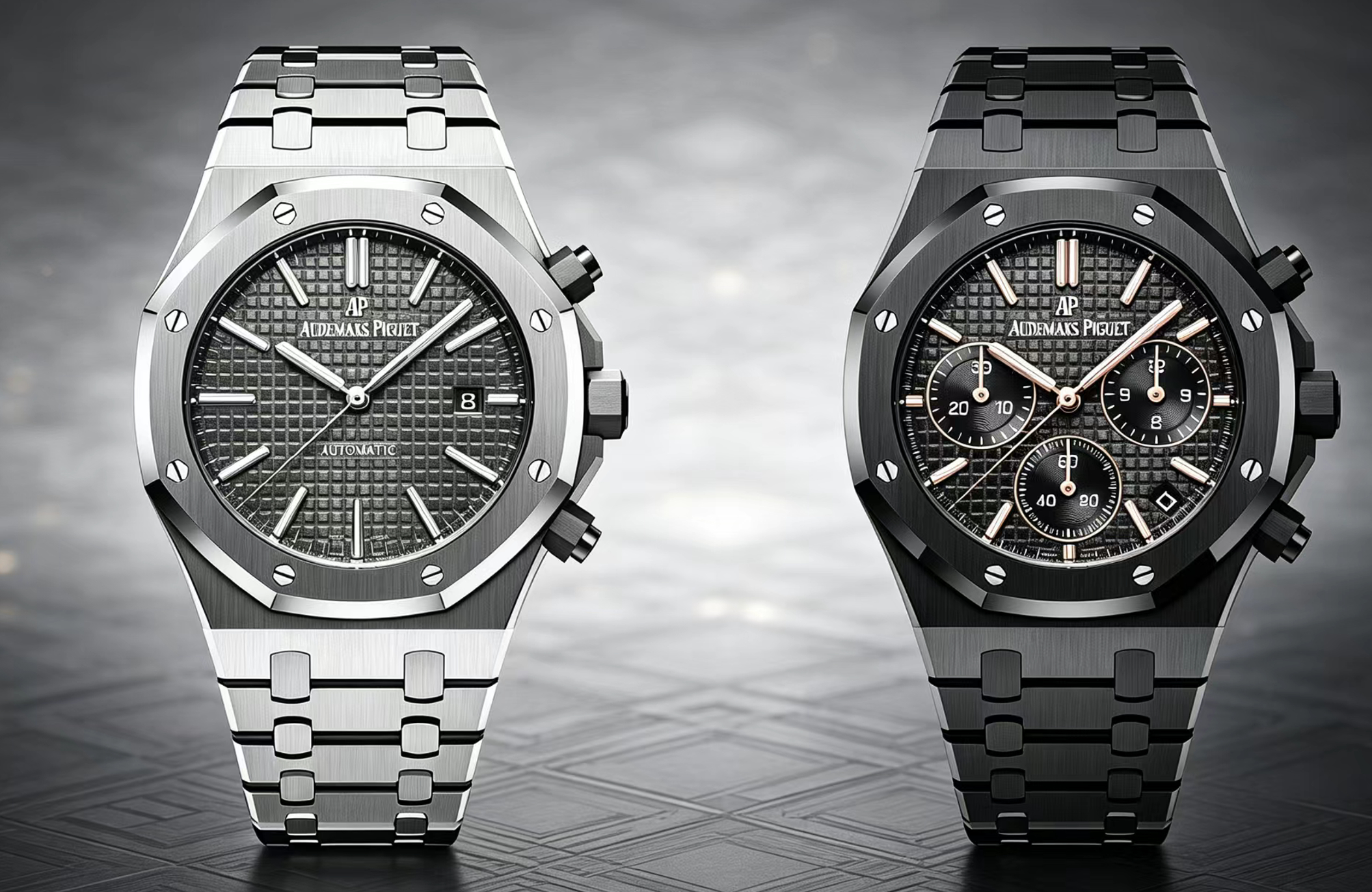
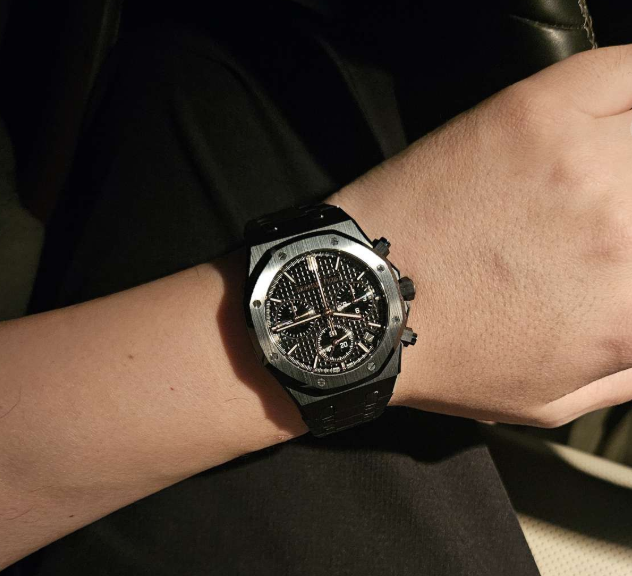
The 4001 integrated chronograph changed that. Landed a little over a year ago and addressed the problem at the root — both the 26240 and the 26331 now hit correct case thickness and full function against the genuine. Layout is right too. Small seconds at 6, thirty-minute counter at 9, twelve-hour counter at 3, date window at 5, two pushers for start/stop and reset. Double-push butterfly clasp, articulating end links.
Real progress.
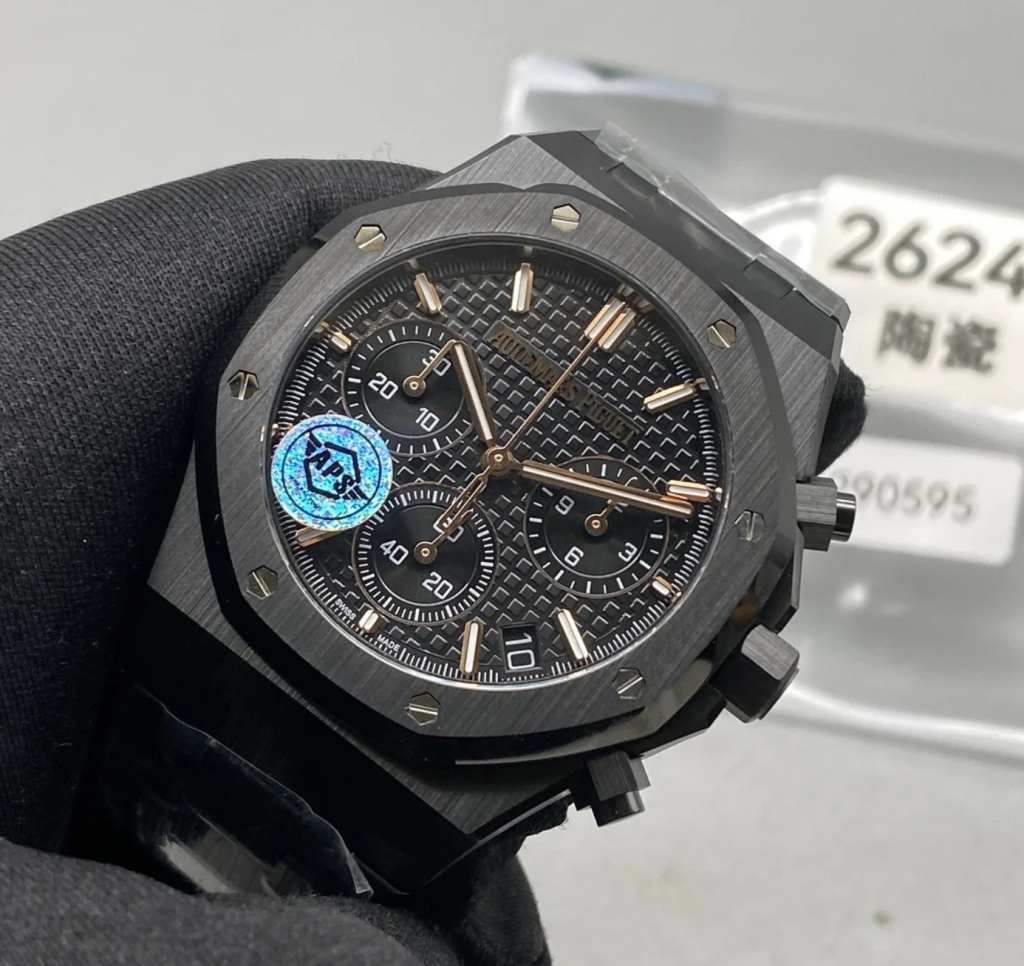
On colours: black ceramic is meaningfully better than white. White ceramic in this segment comes out glossy in a way the genuine isn’t — wrong texture, wrong colour depth. Black ceramic reproduces the brushed refraction the Royal Oak is supposed to have. Steel exists in blue and in a green 50th-anniversary variant, and the dial colours on those are done well.
Where it still loses. On the APS version of the 26240, the dial is the weak point. Genuine uses multi-layer plating with a coating that graduates naturally from centre to edge, sitting somewhere between navy and a deeper blue. The replica dial is flat — single tone, darker, and the reflection reads like paint rather than lacquer, going purple or grey under strong light. The Tapisserie is the other one. Genuine squares are pyramid-shaped, each with a fine matte top and mirror-polished slopes and sharp edges. Replica pattern is die-pressed, shallow, uniform in depth, with rounded edges and no shadow depth. The chronograph sub-dials are the third — genuine sub-dials are finely matte or sunburst with no radial pattern, and the replica has a pronounced radial texture that shouldn’t be there.
Weight, at least, is solved. 169g, same as genuine, off a 3D-scanned case.
How to Tell a Real Free-Sprung From the Three Fakes
Back to the actual question. If a listing says free-sprung, there are four things it could mean — and only one of them is what you think.
Fake one — the cover plate. Factory leaves the index in place and screws a plate over it, sometimes with a decorative strip on top to sell the look. The index is still there and still visible if you actually look. Shanghai 3135 and 3235 units do this, and so do certain VS and O2 Seamaster 300 builds. Calling it free-sprung is covering your ears and stealing the bell.
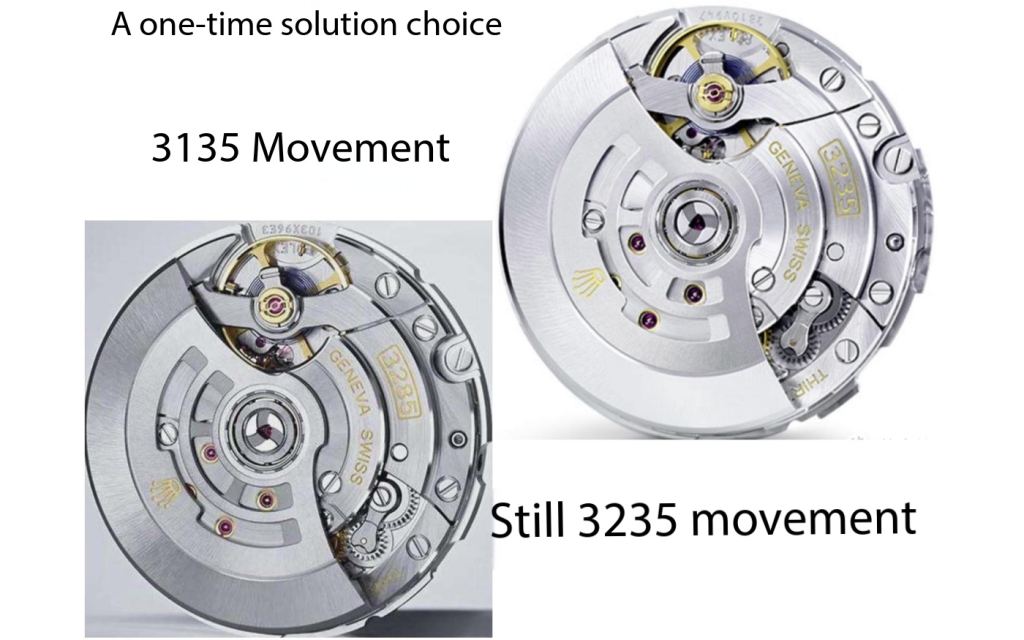
Fake two — ripping the index off. A watchmaker physically removes the regulator stud for about $17–$33. Now you have a movement that can’t be regulated at all, with a bare balance rim carrying no weights. Anyone who knows the movement still spots it in a second, and you’ve traded away your ability to adjust the watch.
Worst of the three. Hard pass.
Fake three — a genuine balance and hairspring assembly. This one is real, technically. You source a genuine Swiss balance-and-hairspring assembly and fit it. Genuinely improves antimagnetic performance and rate stability. Also costs $830–$1,670 for common calibers like the 3135 or 3120, and considerably more for others — a genuine AP 3120 ran about $20,000 last year and has gone up since. Even at the low end you’re looking at $5,000–$10,000. Fitting that to a replica is money in the wrong place. And if the case has a solid back, nobody will ever see it.
The real thing. A true free-sprung balance has adjusting weights set into the rim. That’s the whole test. No weights on the rim, not free-sprung. Replica balance wheels generally can’t be drilled and tapped for weights, which is why the fakes take the shortcuts above instead.
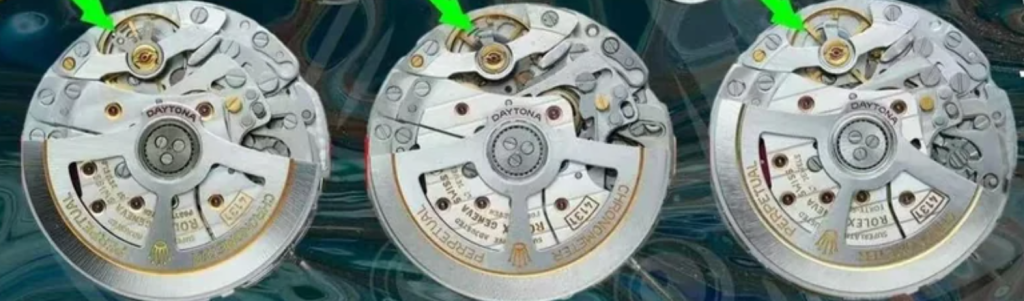
Apply that to the 26240 listing that started this. I have no data confirming the 4001 ships free-sprung, and neither does the seller unless they can show you the balance rim. Ask for a caseback macro. If the rim is smooth, the label is marketing.
Thirty-second check. Settles it.
Does Free-Sprung Actually Run Better?
No. And this is where I part ways with most of the thread.
Stability and durability between a regulated and a free-sprung balance are effectively the same. What changes is servicing. Regulating an indexed movement takes a watchmaker a minute or two. Regulating a free-sprung balance means turning tiny weights and re-measuring, and it can take half an hour with no guarantee the first attempt lands.
That cost gets passed to you every service. Forever.
Chinese manufacturing has moved on this fast, incidentally. Shanghai now produces a genuinely free-sprung 3235 with four visible rim weights, and as of mid-2026 a free-sprung 8806 — though note that one runs 28,800 vph while the genuine Omega 8806 runs 25,200, and it doesn’t reproduce the co-axial escapement. Dandong is reportedly following. The trajectory across this industry has gone bridge-plate movements, then integrated movements, now free-sprung integrated movements. Free-sprung versions cost more to make and more to own.
So here’s where it lands. On a display-back watch where you’ll actually look at the balance, free-sprung buys you visual authenticity. On a solid caseback it buys you nothing at all, and it raises your servicing bill either way. Pay for it if you want the correct view through the sapphire. Don’t pay for it expecting better timekeeping, because that isn’t what you’re getting.
So Which One
Neither pick hinges on the free-sprung question. Which is sort of the point.
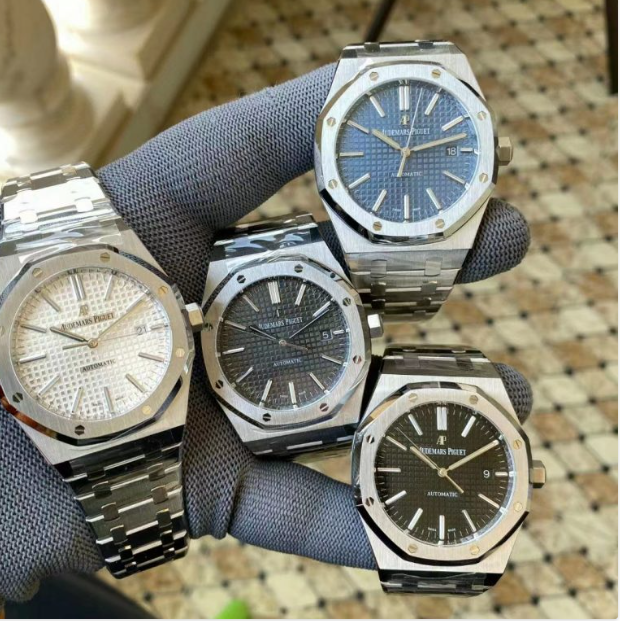
The APS 15400 is the better-built watch of the two on movement architecture — correct balance position, correct shock setting, real functioning gear train, thinner case, closer weight. Nobody did the 15400 better. But there’s a hard problem attached. APS was raided in April 2026 and is out of production. What’s circulating is clearance stock, prices are unstable, and once it’s gone the parts supply goes with it. I’ve written up the situation in more detail in my APSF supply status breakdown. Buy one because you want that specific watch and you accept there’s no service pipeline behind it — not as a long-term daily.
The 26240 is the more interesting watch and the more current one. The 4001 solved a problem that genuinely couldn’t be solved before without spending $5,000 on a donor movement. Get it in black ceramic, not white. Go in knowing the dial won’t have the genuine’s graduation and the Tapisserie will read flat under close light — those are the compromises at this level, and they’re visible in photos before you ever hand over money.
Real talk — if you want the Royal Oak experience with a supply chain that still exists behind it, the three-hand route is the safer play right now. I covered that in the post-APSF Royal Oak buyer’s guide.
Whichever way you go, do the balance-rim check before you pay. If a listing claims free-sprung and the seller can’t produce a macro of the balance, you already have your answer — and it says more about the seller than about the movement. Find one who’ll show you the caseback and stand behind a real warranty.
That’s the job.